If you want to work with hotels, tourism boards or travel brands, it’s worth having your media kit ready before you start sending emails. You can spend ages choosing lovely travel photos, but the person opening your kit also needs to understand who follows you and what you could actually create for them.
I’ve been blogging since 2015 and work across my blog, Instagram and YouTube, so there are a few different parts of The Wandering Quinn to introduce! I’m using my own media kit below to show you how to bring those details together, along with the things I’d focus on if I were putting a kit together for the first time.
What is a creator media kit?
An influencer media kit is a short introduction to your work for potential collaborators. It brings together your niche, audience, content examples, key statistics and contact details.
Think about the person receiving it. They may need to pass your details to a hotel manager or someone else in their marketing team. Your kit should help them explain why you’d suit the project, with enough information to start a conversation about the work and budget. A beautiful cover photo is a good start, but there needs to be something useful behind it!
If you’d like to explore the basics further, here’s a more in-depth guide to influencer media kits.
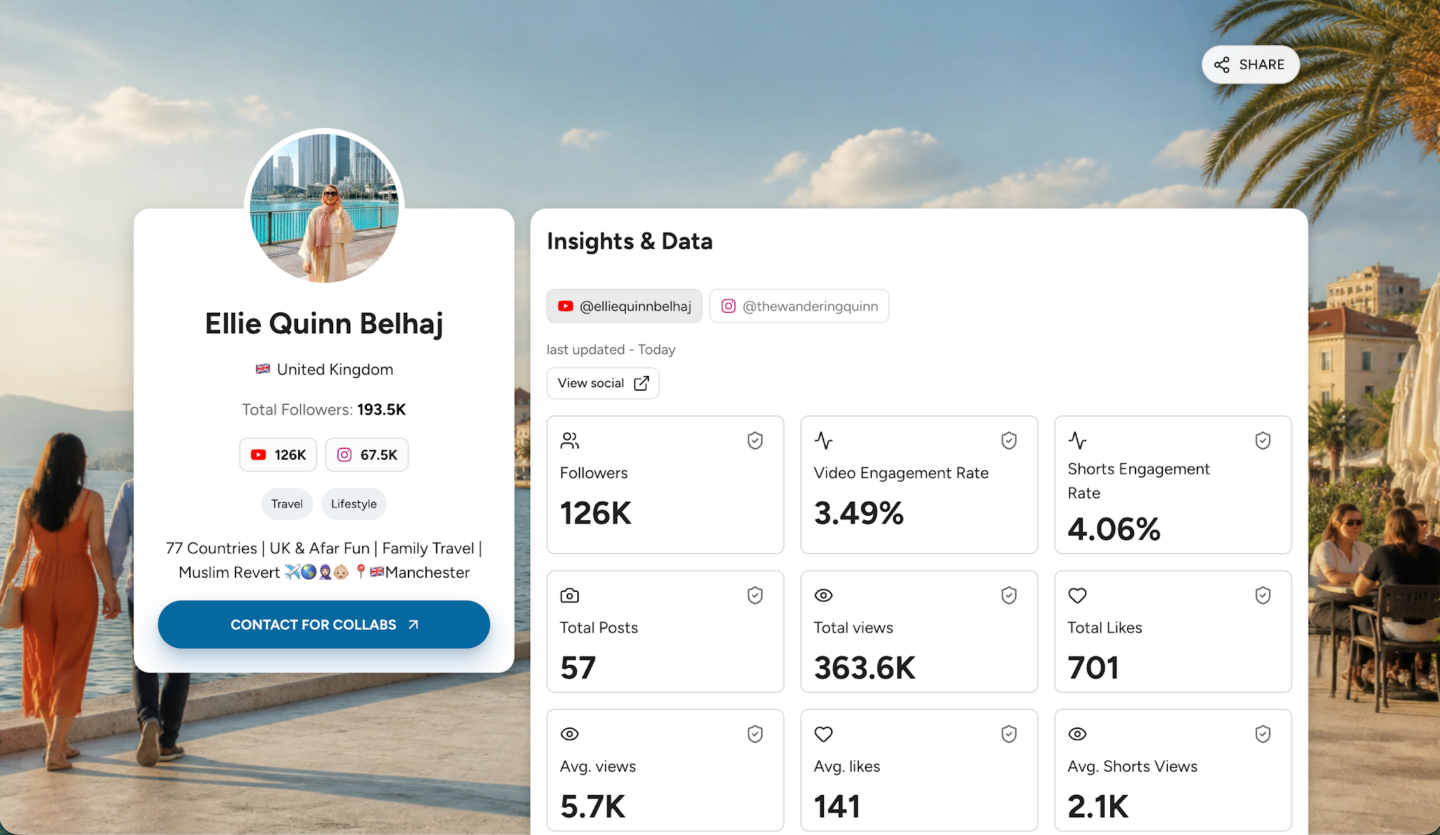
My media kit brings my introduction and social statistics together. The figures shown are a snapshot and will change over time.
1. Help a brand understand your travel content
Start with your name, where you’re based, your website and social handles, then write a short bio that says something more useful than “I love travelling”. What kind of travel content do you create, and who is it for? You might focus on solo backpacking, accessible city breaks, family holidays or a particular part of the world.
My own content includes UK days out and family travel as well as trips further afield. Those details give a potential partner more to work with than simply describing me as a travel blogger. If you’re approaching a family hotel, make your family content easy to find. If you’re pitching an adults-only retreat, lead with work that makes sense for that stay.
For example, a family travel creator could write: “I help UK families plan manageable weekends away, with honest hotel reviews, easy itineraries and ideas for travelling with young children.” That tells a brand what the content is about and who it’s for. Keep it true to your work, though. Changing the examples you show is fine, but don’t present yourself as a completely different creator for each pitch.
2. Give your audience numbers some context
Follower numbers are an obvious thing to include, but I’d give just as much thought to the people behind them. Imagine you’re pitching a UK weekend break: showing that a good proportion of your audience lives in the UK helps explain why the trip could interest them. Your own location and your audience’s location are two different things, so make both clear.
Open your platform insights and collect the figures that relate to the work you’re offering: followers or subscribers, the main audience countries and age ranges where available, and recent performance for the relevant content format. For Instagram Stories, that might be typical views and link taps. For a Reel, views, saves and shares can give useful context. If you have a blog, include monthly users or sessions and label which measure you’re using.
Keep Instagram, YouTube and blog figures separate, and date them. “Views” on its own leaves a lot of questions! Say whether a number covers one post, a month or the lifetime of a channel. If you include an engagement rate, state the source or how you calculated it, since rates based on followers and rates based on reach aren’t interchangeable. Leave out information you don’t have rather than guessing.
To calculate your average views per post, take 10 recent posts of the same format, add up their views and divide by 10. State the sample and collection date, and remember that a video posted yesterday has had less time to collect views than one posted a month ago. If one viral post pushes your average much higher than usual, explain that. You can feature it as a separate success story while showing brands how your other posts typically perform. And don’t call combined followers across platforms “unique reach”, because some people follow you in several places.
3. Show the kind of content you want to be booked for
This is where I’d spend time choosing carefully. Your photographs might show a hotel’s marketing team that you can capture a beautiful setting, but your examples should also help them imagine how you’d cover a stay. For a family property, an example showing the room layout, food options and things to do nearby can make your approach much clearer than a beautiful pool photo on its own.
Choose two or three pieces that match the work you’re pitching and link directly to them. If you want to write a destination guide, show a guide. If you’re offering video, let the brand watch a video rather than sending it to your profile to search for one. You don’t need a huge portfolio. A few relevant examples are easier to assess.
Give each example a short explanation: what you made, what you did yourself and any result you can verify. For example, show a Reel about a family hotel stay that you planned, filmed and edited, then include its views and saves during the first 30 days. A blog example might include visits to that article, rather than traffic to your whole website. If you have a genuine testimonial from a previous partner, a short one can help too.
If you haven’t worked with brands yet, use content from trips you organised yourself and label it honestly. A useful hotel review still shows your work even if you paid for the stay. And keep results precise: views, link clicks and confirmed bookings are different things. Only claim bookings if you have a way to attribute them to your content.
4. Be clear about what you’re offering
“I’d love to collaborate” is a nice opening, but it doesn’t give a hotel much to plan around. List the things a brand can book you for, such as a blog review, an Instagram Reel, a YouTube video or a set of edited photographs. Explain whether you’ll publish the content on your own channels or create photos and videos for the brand to share on its channels. Those are different services.
You could describe an example package as one Reel and three Story frames published on your Instagram, with a link to the hotel in the Stories. That’s much clearer than “social media coverage”. If you also provide photographs for the hotel to use, say how many and discuss where and for how long they can use them. You can agree the exact scope once you have a brief.
You don’t have to put fixed prices in your media kit. A local afternoon of filming and a trip that takes several days involve different amounts of work, so a tailored quote can make more sense. If you show a starting price, explain what it covers. A hosted stay also needs a clear conversation about any fee, travel costs, meals and activities. Don’t assume everyone has the same idea of what’s included.
For content a brand wants to reuse, clarify whether it’s for its own social posts, website or paid adverts before quoting. You don’t need to fit the whole agreement into your kit, but these are useful questions to have ready. Make your business email or contact button easy to find, so a brand can get in touch without searching your social profiles.
5. Keep the design easy to read
Once you have your information, putting the kit together is much easier. You can use a document or design tool and export a PDF, or build an online kit with a shareable link, as I did with CreatorsJet.
For a PDF, I’d start with one or two pages and only add more if there’s something useful to show. An online kit gives you more space, but put your introduction, key audience figures and contact details near the top.
Use your own travel photographs, readable text and a layout you can update without starting again. Check it on your phone too. Tiny statistics might look neat on a laptop, but they’re frustrating to read when someone opens your email on the move.
A simple order is your name and short bio, your audience and key figures, a few work examples, then your services and contact details. I’d choose a few clearly labelled figures and keep the detailed analytics screenshots ready to send if a brand asks.
Before you finish, check that the kit reflects the work you’re doing now. If your travel focus has changed or you have a much stronger example to share, update that as well as the follower count.
6. Send it with a useful, personal pitch
Before sending your kit, open every link and check that someone can view it without requesting access. Test the contact button, check the figures and make sure the work examples still open. It’s a small job, but you don’t want the person you’ve just pitched to end up on a broken page.
My online kit offers a shareable link and a PDF download, as shown below.
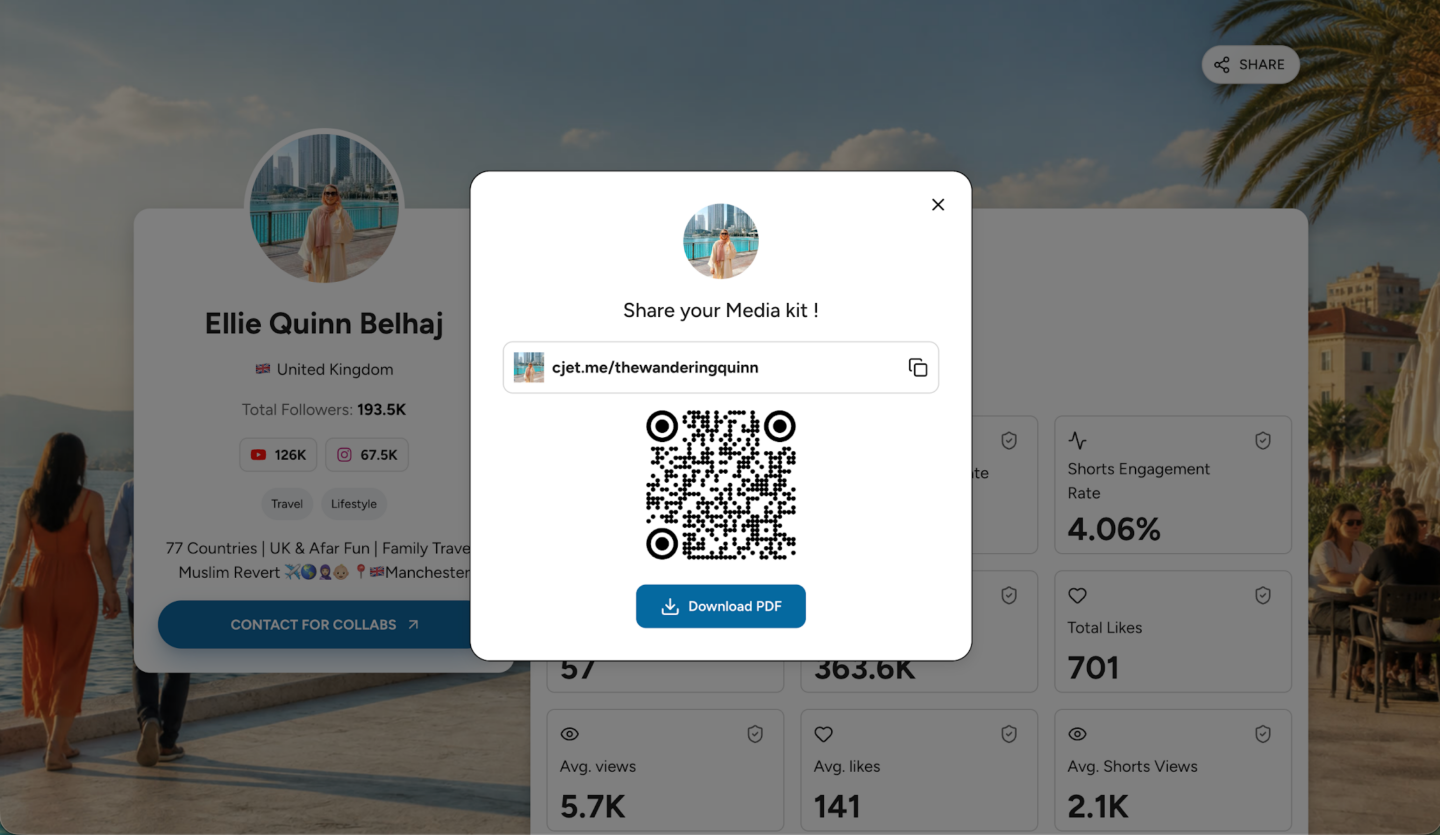
A link works well in a pitch, while a PDF is useful when a brand asks for an attachment.
Use your media kit to introduce your work, then use the email to explain your idea for that particular brand. For a hotel stay, be ready to give your proposed dates, whether they’re flexible, who would be travelling, what support you’re requesting, and what you’d create. The hotel may also need to know when you’ll publish and whether you need access to specific spaces for filming. Put those trip details in the pitch so you can use the same kit for other enquiries.
For example: “I’m planning a family weekend in your area and would love to create a guide to staying at your hotel with young children, including a Reel covering the family room and nearby days out. My proposed dates are below, and my media kit includes audience details and examples of similar work.” Then explain what you’re asking for and the deliverables you’re proposing.
Make the idea specific enough that they can picture it, and be clear that any review will reflect your experience of the stay. There’s still a conversation to have about whether the collaboration suits both of you.
I hope this helps you put together a media kit you feel comfortable sending!
You don’t need to wait for a certain follower count to make one, although individual campaigns may have their own requirements. Start with a clear picture of your audience, work you’re proud of and a realistic offer. That gives a potential partner something useful to respond to, and gives you a much better starting point for the conversation.