Granada is one of the easiest and most meaningful cities in Europe to visit as a Muslim. For nearly 800 years this corner of Spain was part of Al Andalus, and Granada was the very last Muslim kingdom on the peninsula. Today you can pray at a mosque that looks across at the Alhambra, eat halal food on almost every street of the old Moorish quarter, and walk through palaces covered in Arabic calligraphy showing that you don’t need to travel to North America or the Arab world to feel at home as a Muslim on a trip.
I’ve visited Granada four times, in November, June and July, and it’s a place I keep coming back to. In this guide I’ll share the halal restaurants I love, how to visit the Granada Mosque for Friday prayers, the Islamic history that makes the city so special, and the other cities and towns in Andalusia with mosques and Islamic heritage worth adding to your trip.
Only have a short time? See my one day in Granada itinerary for the perfect plan.
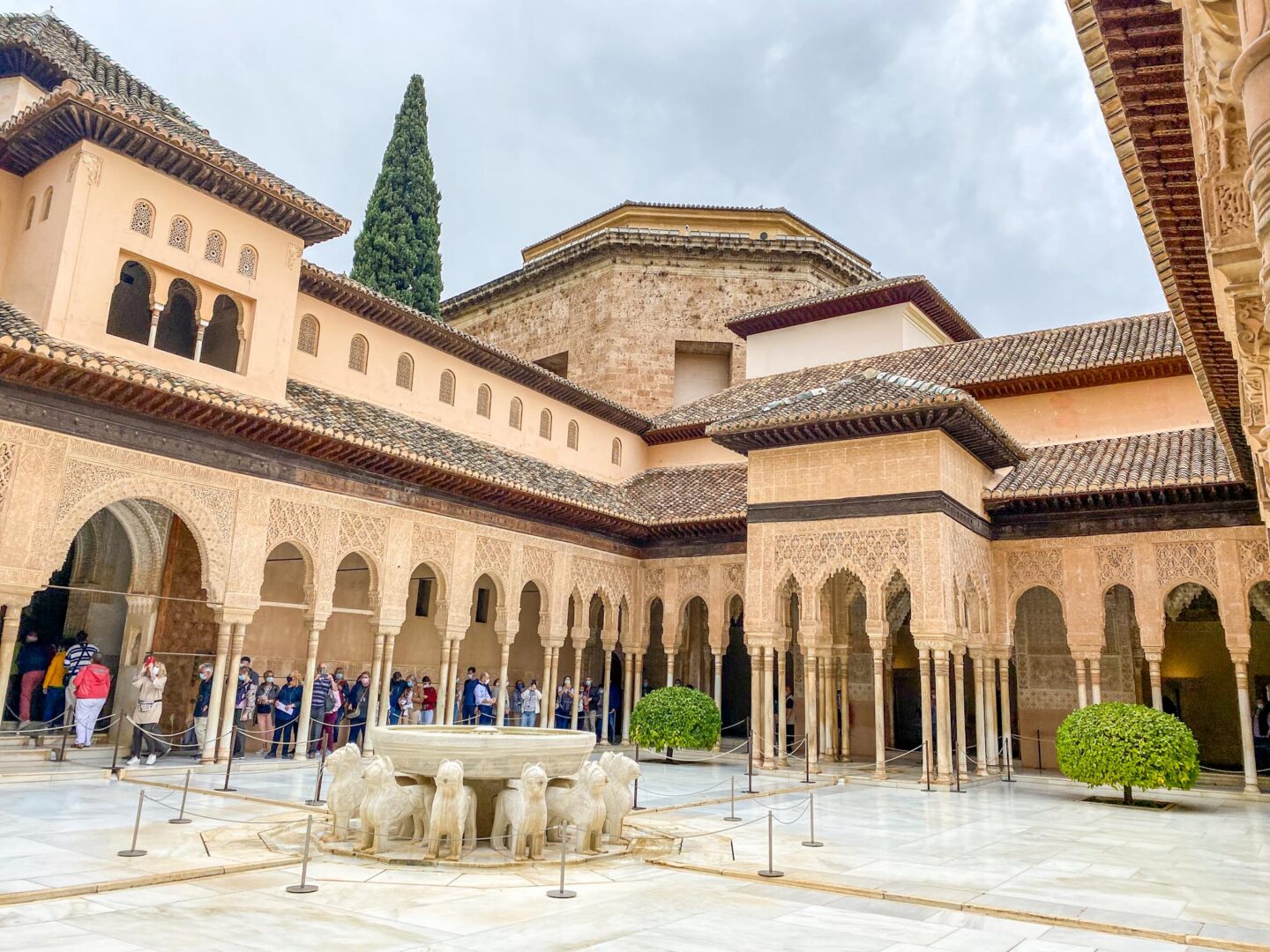
Why Granada Is So Special for Muslim Travellers: A Short History
Granada’s story is the last chapter of Al Andalus, the name for the lands of the Iberian peninsula under Muslim rule. Muslim armies crossed from North Africa in 711, and within a few years most of what is now Spain and Portugal was under Islamic rule. For centuries, cities like Córdoba were among the greatest centres of learning in the world, famous for their scholars, libraries, science and architecture.
As Christian kingdoms in the north pushed south, the great Muslim cities fell one by one. After Córdoba fell in 1236 and Seville in 1248, Granada became the refuge. In 1238 the Nasrid dynasty made it the capital of their kingdom, and for more than 250 years the Emirate of Granada was the last Muslim state in Western Europe. This is when the Alhambra was built, its walls carved with the Nasrid motto wa la ghaliba illa Allah, “there is no victor but God”.
On 2 January 1492, the last Nasrid sultan, Muhammad XII (known in Spain as Boabdil), handed the keys of Granada to Ferdinand and Isabella. The surrender treaty promised Muslims they could keep their faith, but within a decade those promises were broken. Muslims were forced to convert, and their descendants, the Moriscos, were finally expelled from Spain between 1609 and 1614.
Today, Islam has returned to Granada. The Albaicín, the old Moorish quarter, is home to a Muslim community of Spanish converts, North Africans and others, with halal butchers, tea houses and the Granada Mosque at its heart. It’s this mix of living faith and deep history that makes Granada feel so welcoming for Muslim visitors.
I know from people who have lived Granada for a long time, how hard it was to get the mosque built and how many people want that land because it is in such a prestigious position in The Albaicín, so I think it’s important for us to visit as Muslims and help generate income for Muslims living there and show the need for the mosque and other sites.
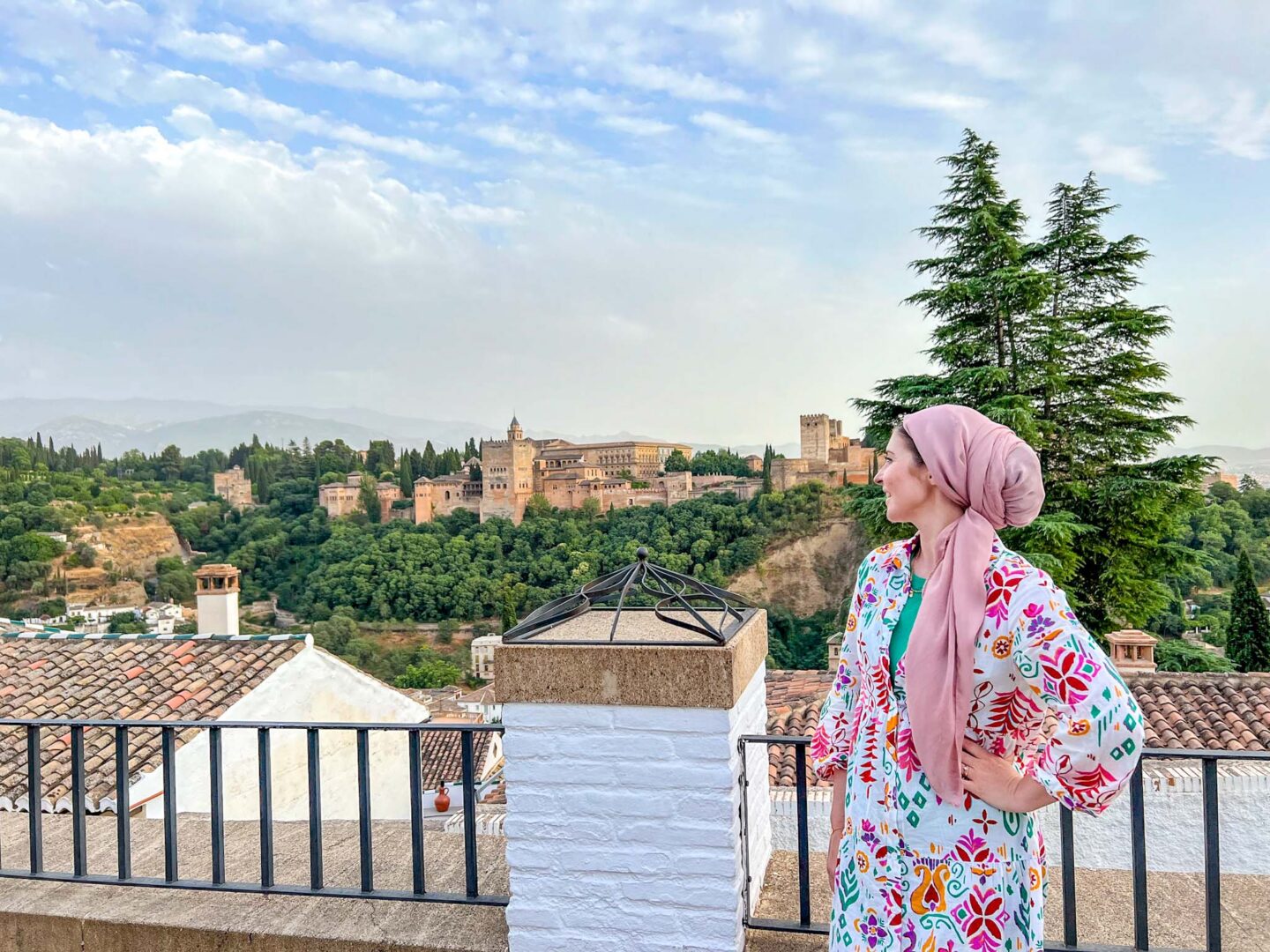
Islamic Heritage to See in Granada
The Alhambra
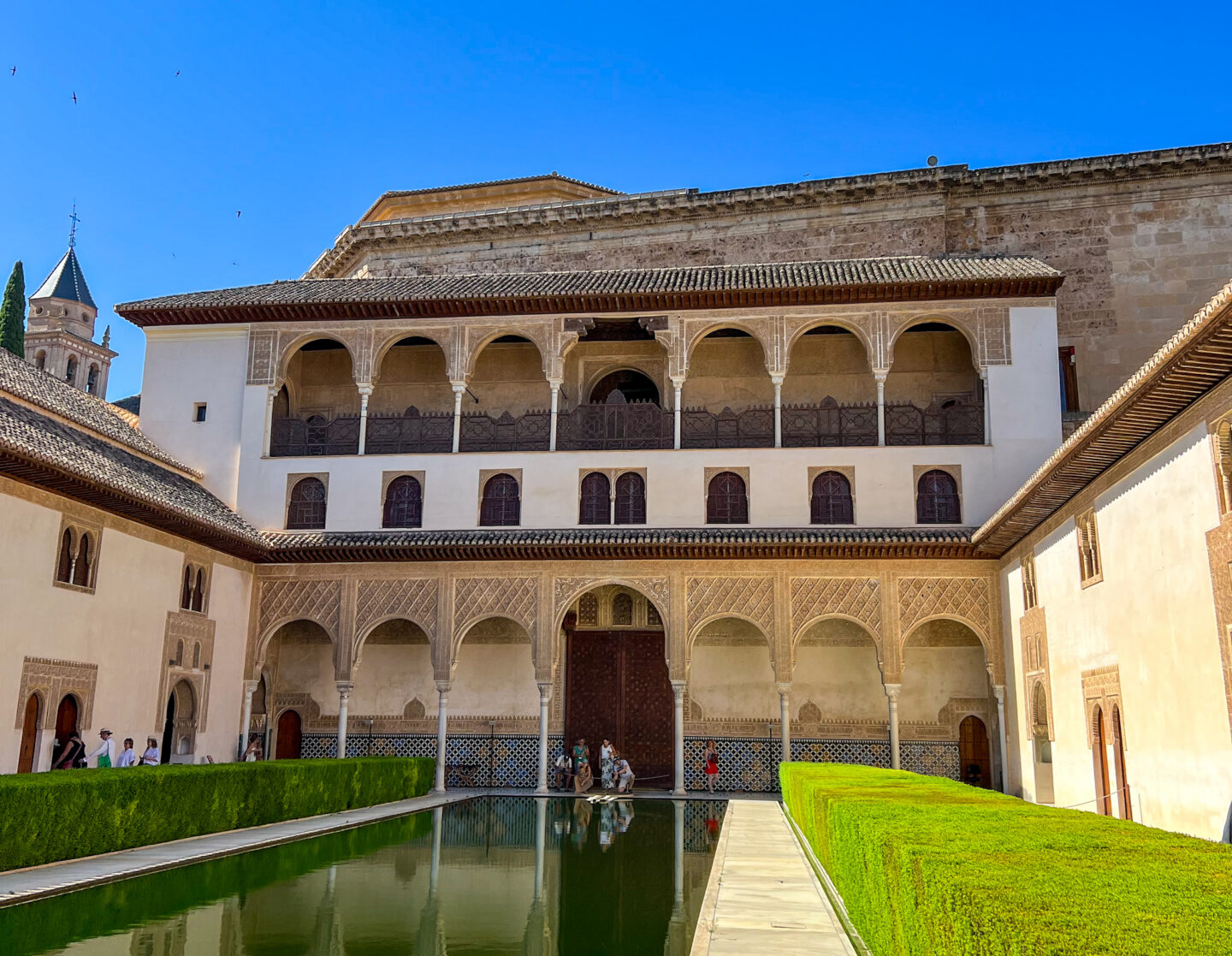
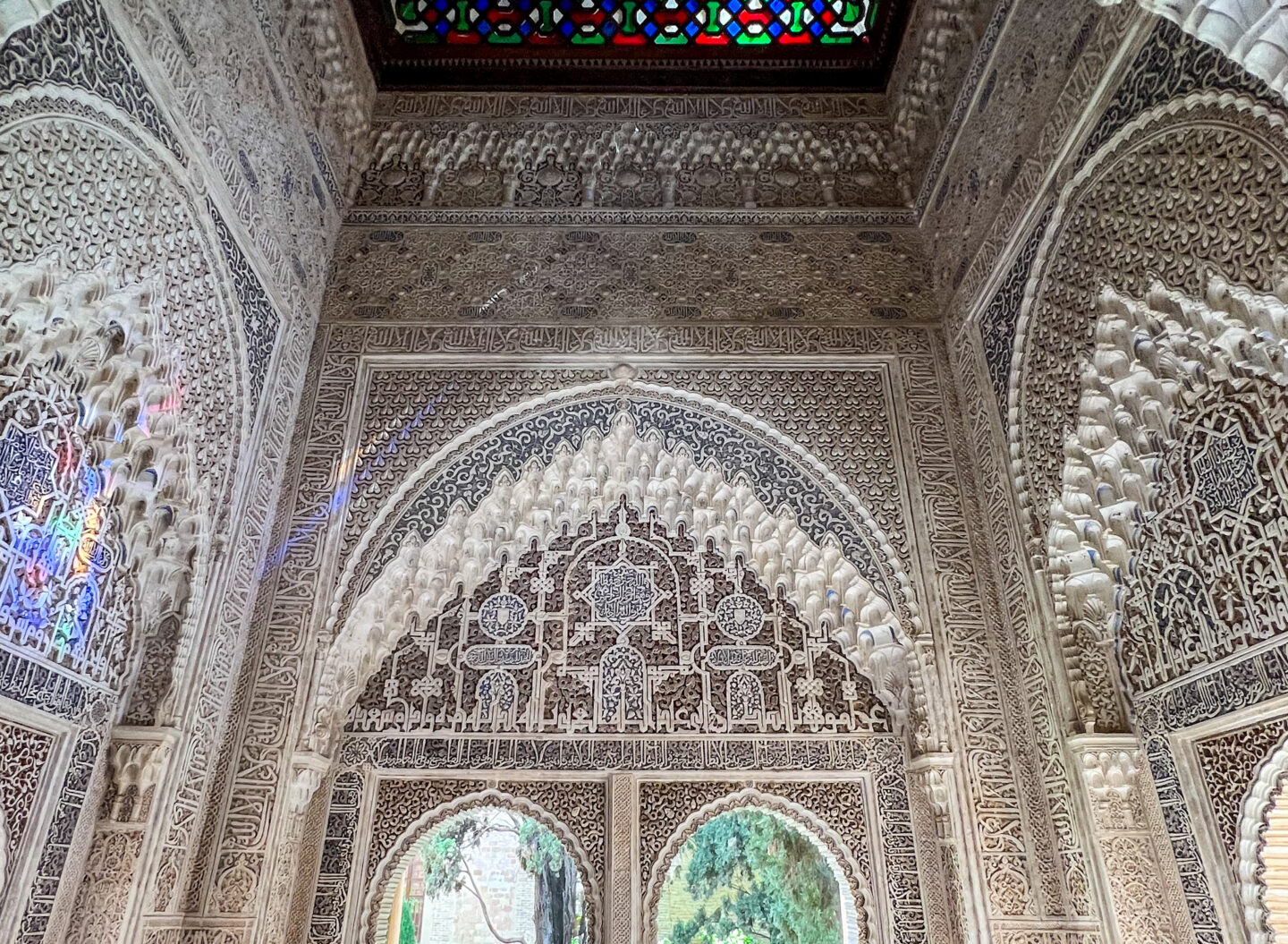
The Alhambra is the crowning jewel of Al Andalus and the reason most Muslim travellers come to Granada. Inside the Nasrid Palaces, look up at the carved ceilings and you’ll see Quranic verses, poetry and the Nasrid motto repeated across almost every wall.
Book well ahead, as tickets sell out, especially tickets to the Nasrid Palaces which is where you see the stunning inside and courtyard of the Palace so book your Alhambra tickets as soon as you book your trip to Granada. I visited in November only booking the trip 3 weeks ahead and tickets to the Nasrid Palaces had already sold out. You can choose a standard entry ticket with an audioguide or a guided tour with tickets.
I will note here that if you book a tour guide on the likes of Get Your Guide, or Viator, they won’t tell you much, or perhaps anything, about the Quranic verses or poetry so, for a visit with real meaning, I can’t recommend Ouafa enough. She’s a local guide who runs a spiritual Islamic tour of the Alhambra in English, Spanish, Arabic and French. I’ve toured with her three times and she knows so much. She explains the Islamic meaning behind the architecture and inscriptions in a way a standard tour never does. You can contact her on Instagram here.
The Albaicín
The Albaicín is the old Muslim quarter, and its narrow lanes and white houses still follow their medieval layout. Wander up from Plaza Nueva and you’ll pass Moroccan shops, tea houses and the gardens of the Granada Mosque at the top.
El Bañuelo
Tucked along Carrera del Darro, El Bañuelo is an 11th century Arab bathhouse and one of the best preserved in Spain. It’s small, but the star shaped skylights in the vaulted ceilings are beautiful.
The Madraza
Opposite the Royal Chapel, the Madraza was Granada’s Islamic university, founded by the Nasrid sultan Yusuf I in the 14th century. Its original prayer room, with a decorated mihrab, survives inside.
Corral del Carbón
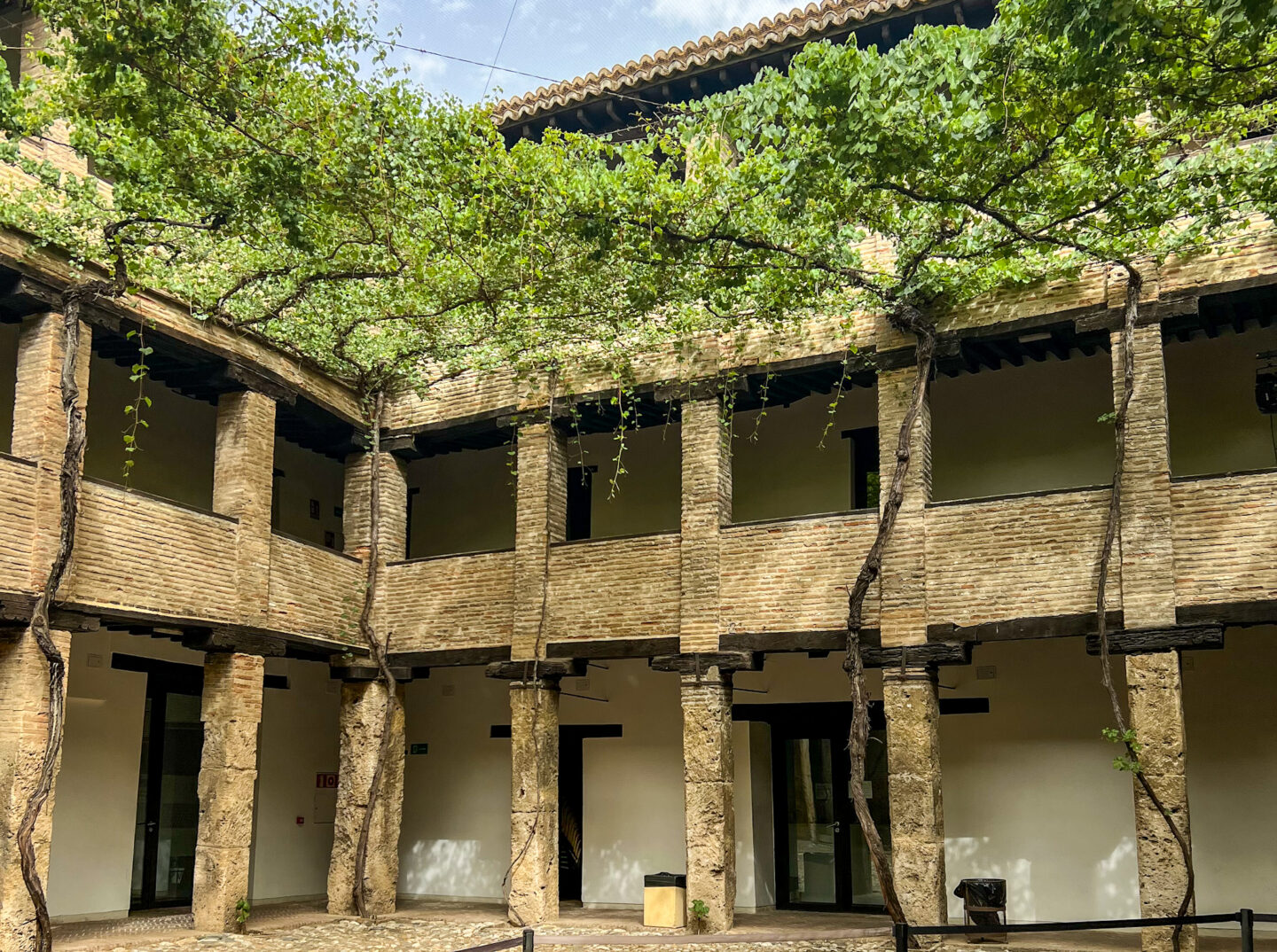
Near the cathedral, this 14th century building was a Nasrid inn where merchants stayed and stored their goods. The Corral del Carbón is the only one of its kind left in Spain and is a testament to Nasrid craftsmanship so it is a must visit, especially as it is free to enter. It is open to the public year-round from 9:00 AM to 8:00 PM and closed on public holidays.
The tea houses of Calle Calderería
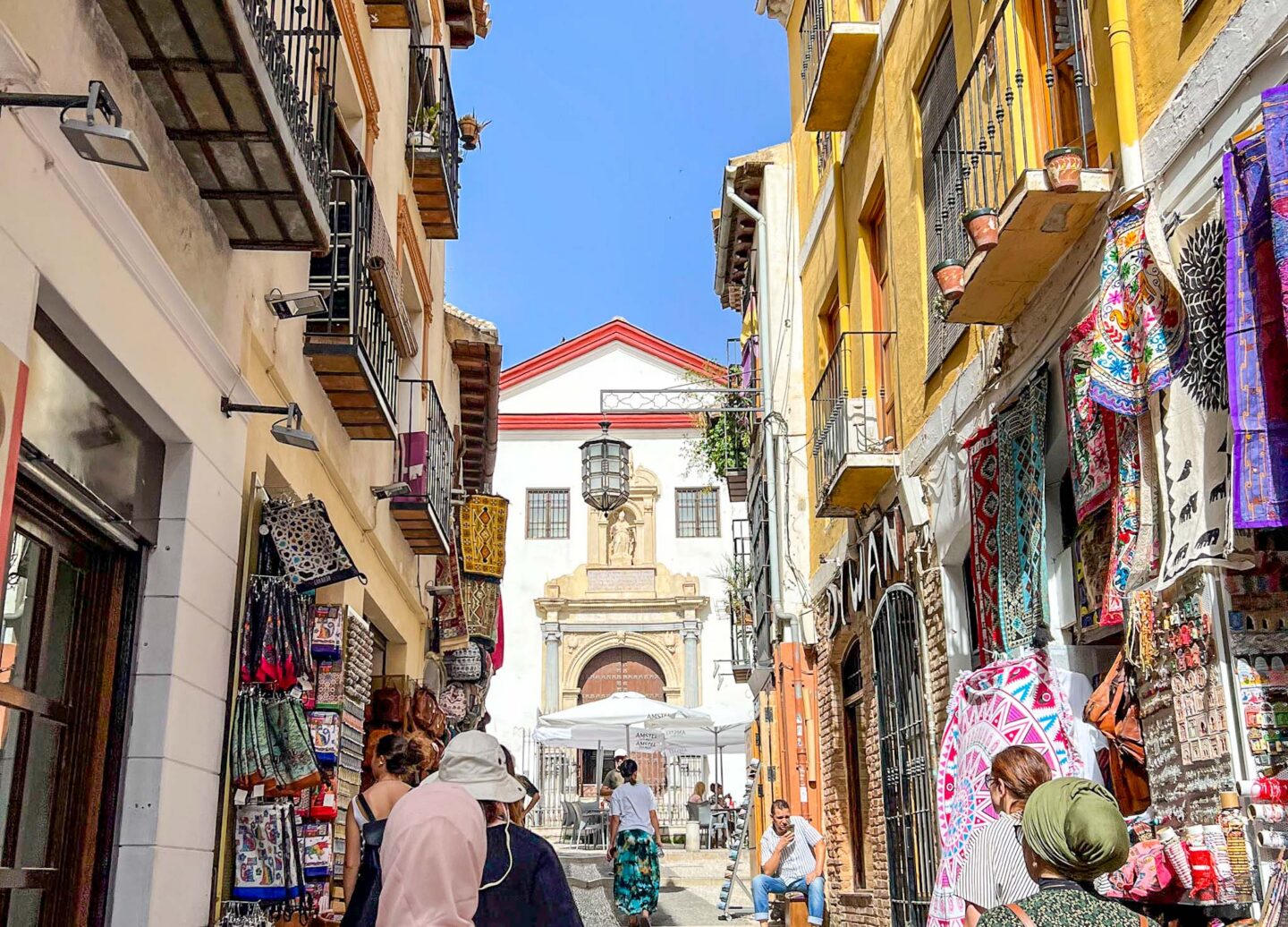
Calle Calderería Nueva, often called the street of the tea houses, is lined with Moroccan teterías serving mint tea, pastries and shisha. It’s the perfect place to rest after climbing the Albaicín.
A traditional hammam
Granada’s Arab baths recreate the bathing culture of Al Andalus, with warm, hot and cold pools under lantern lit arches. Try Hammam Al Ándalus or Hammam Palacio Nazarí. The baths are mixed, so check with the venue if you need women only sessions.
Visiting the Granada Mosque (Mezquita Mayor de Granada)
The Granada Mosque sits at the top of the Albaicín on Plaza San Nicolás, right next to the famous Mirador de San Nicolás viewpoint. It opened in the summer of 2003, the first mosque built in Granada in over 500 years, and it looks straight across the valley at the Alhambra and the Sierra Nevada.
The mosque is made up of three parts: a garden, the prayer hall itself and a Centre for Islamic Studies. It holds daily prayers, Friday jumu’ah, and during Ramadan there are tarawih prayers and communal iftars.
The mosque gardens
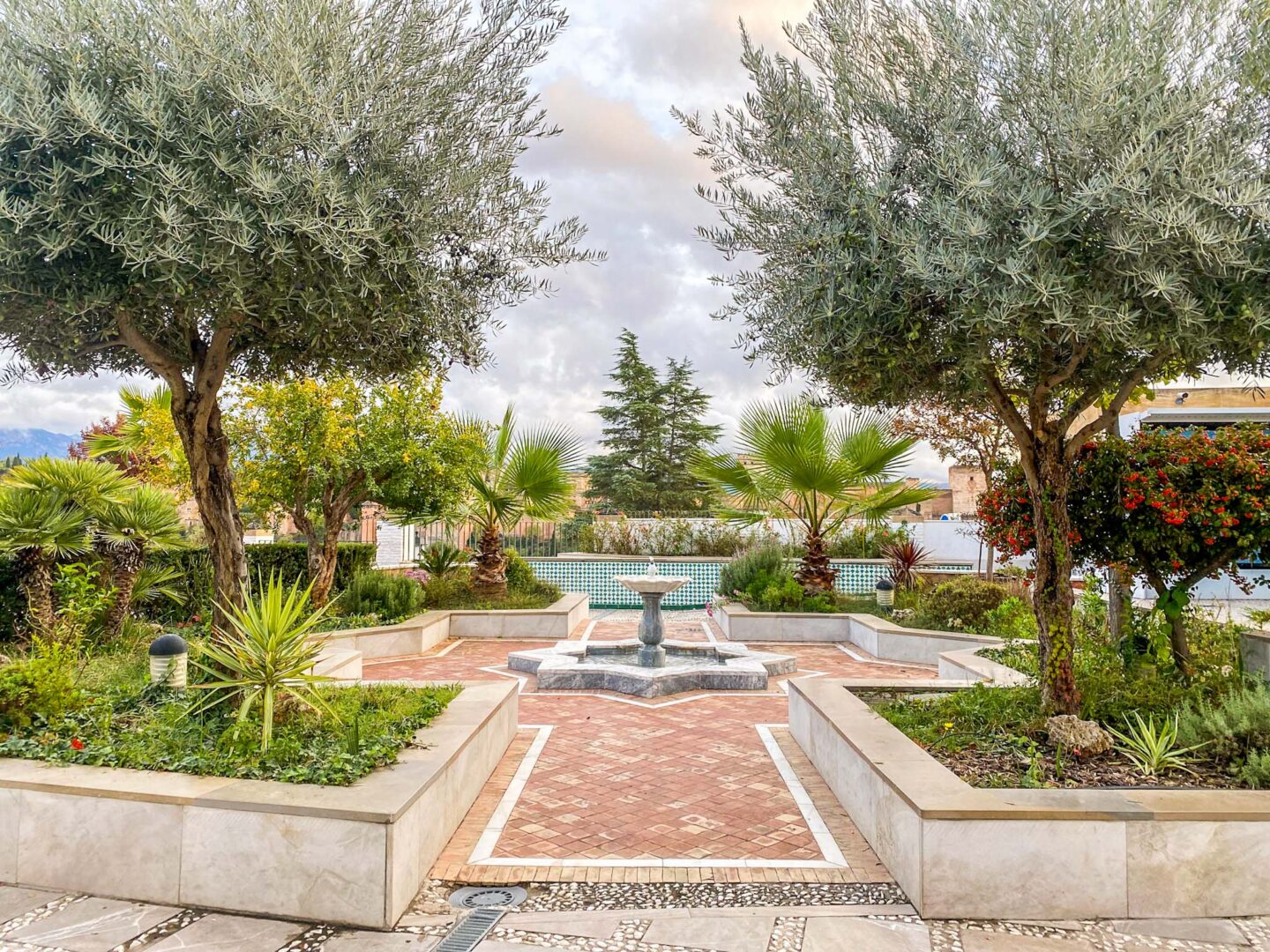
Even if you’re not there for prayer, the garden is open to visitors and is one of the most peaceful spots in Granada. It has fountains, olive, pomegranate and orange trees, and a view of the Alhambra that rivals the busy viewpoint next door, with far fewer crowds and a better view in my opinion.
It’s my favourite place in the city to watch the sunset. The gates aren’t always open, so check the opening hours before you walk up.
Friday prayers (jumu’ah)
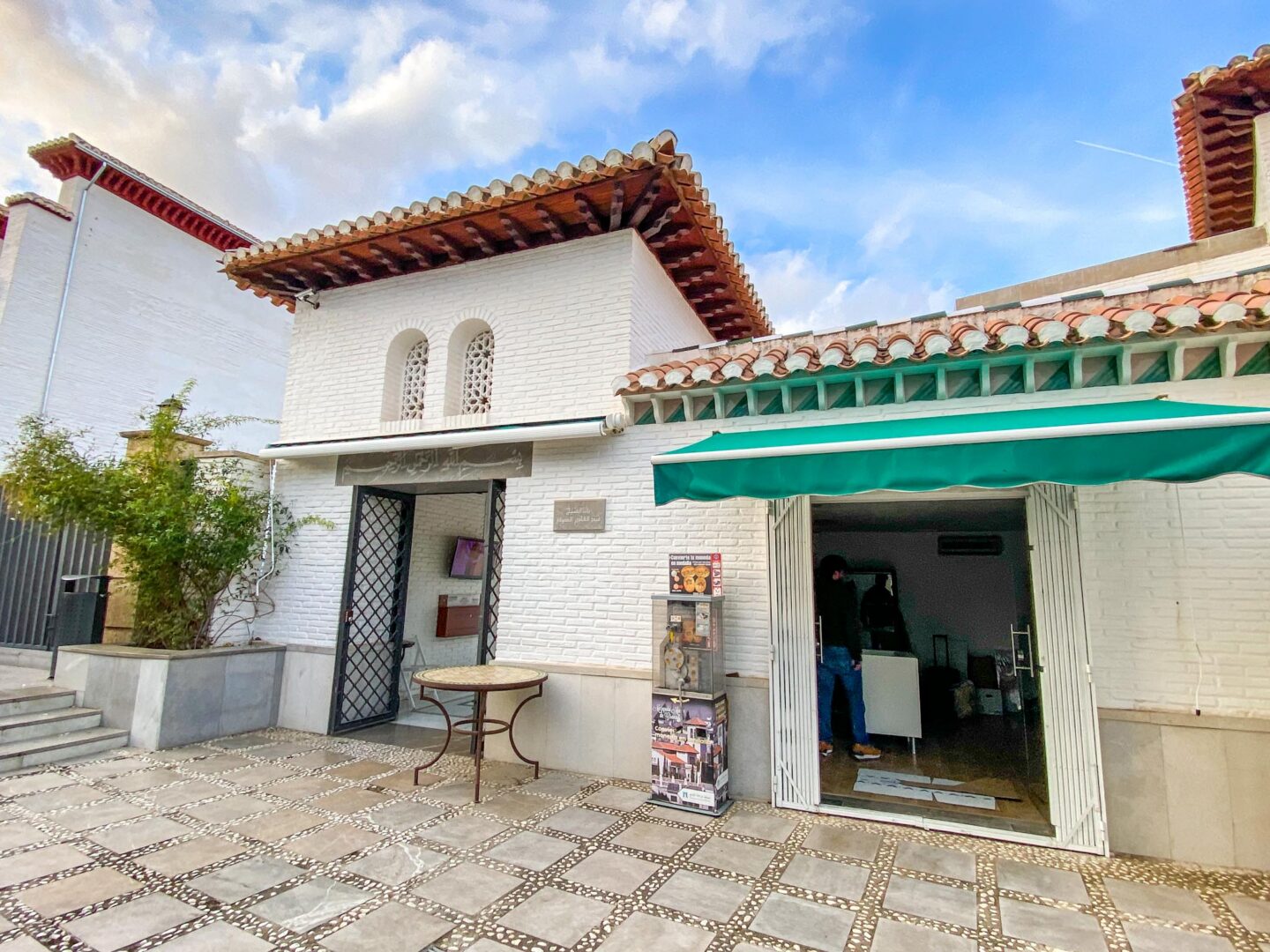
On my recent visit to Granada, I attended Jummah Prayer which starts at 14:30. I would recommend getting to the mosque a bit earlier to get a good place in the mosque. The mosque has a ladies section to one side of the prayer hall with outside areas available to pray for men and women.
The Khutbah was in Arabic to start with and then in Spanish.
Women’s and men’s prayer areas
Mens area: The mens area is pretty self explanatory. You enter the mosque gardens, take a left and you are in the courtyard which leads to the prayer hall for the men. There is a clearly marked door for the mens wudu area and there is also an outside wudu area in the courtyard.
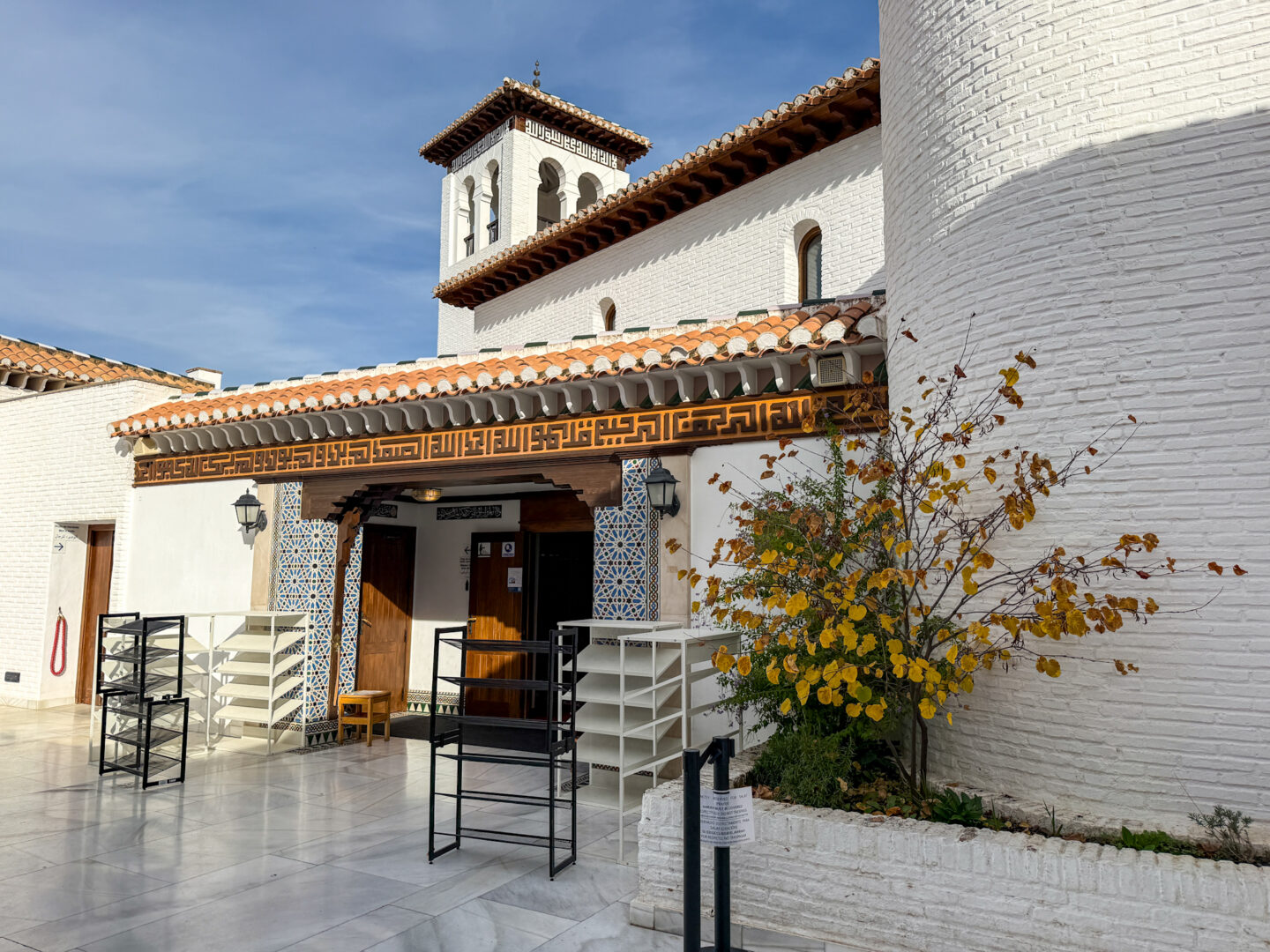
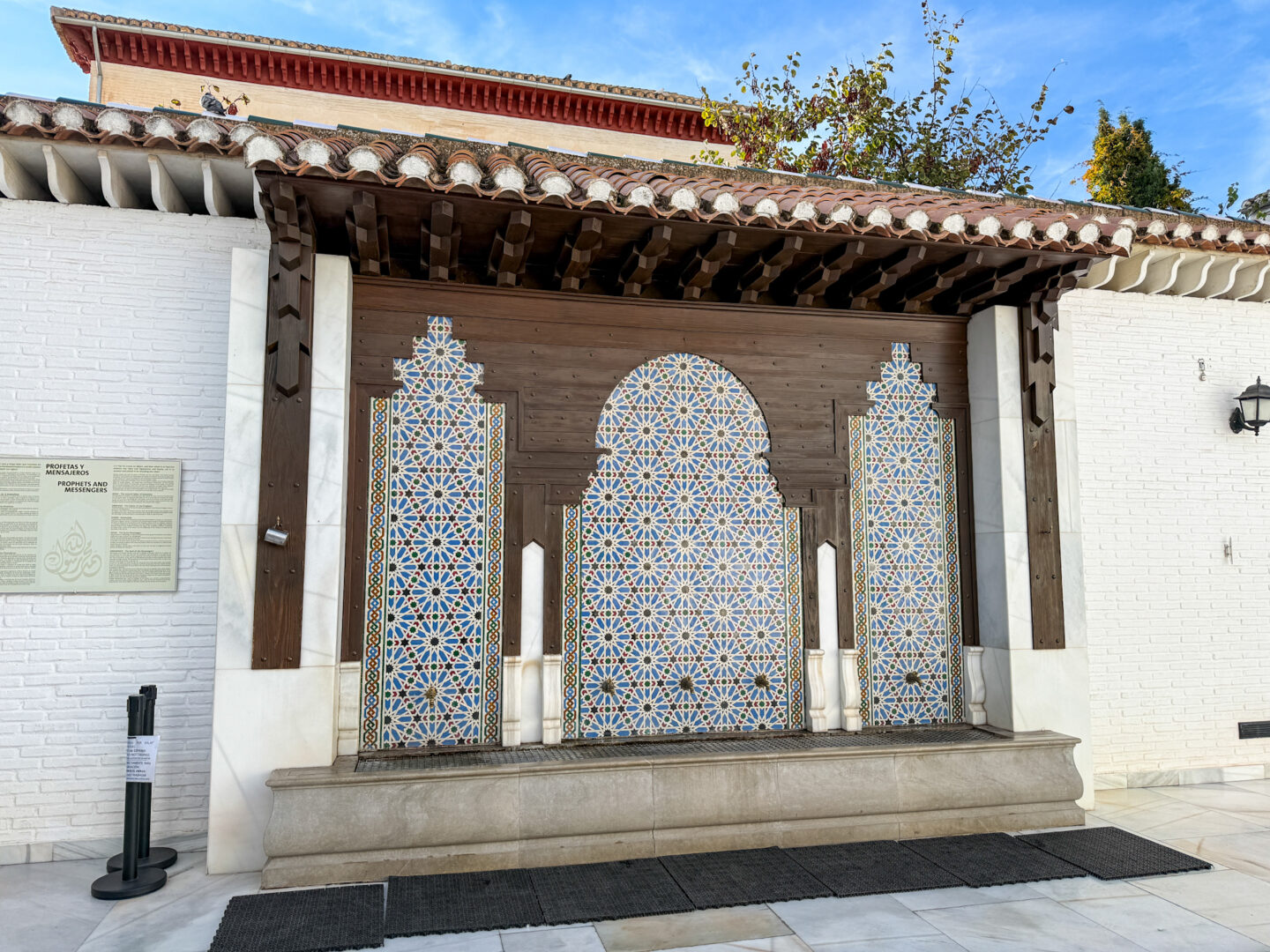
Women’s area: For women, outside of Friday prayers, you enter the mosque the same way and there is a door on the left of the main mosque entrance which is detailed as the women’s prayer area. There will be skirts you can put over your clothing if you need some extra modesty which is lovely touch.
To get to the women’s wudu area, you enter through that door, walk through the women’s prayer area to a door at the back of the room which takes you downstairs to the wudu area.
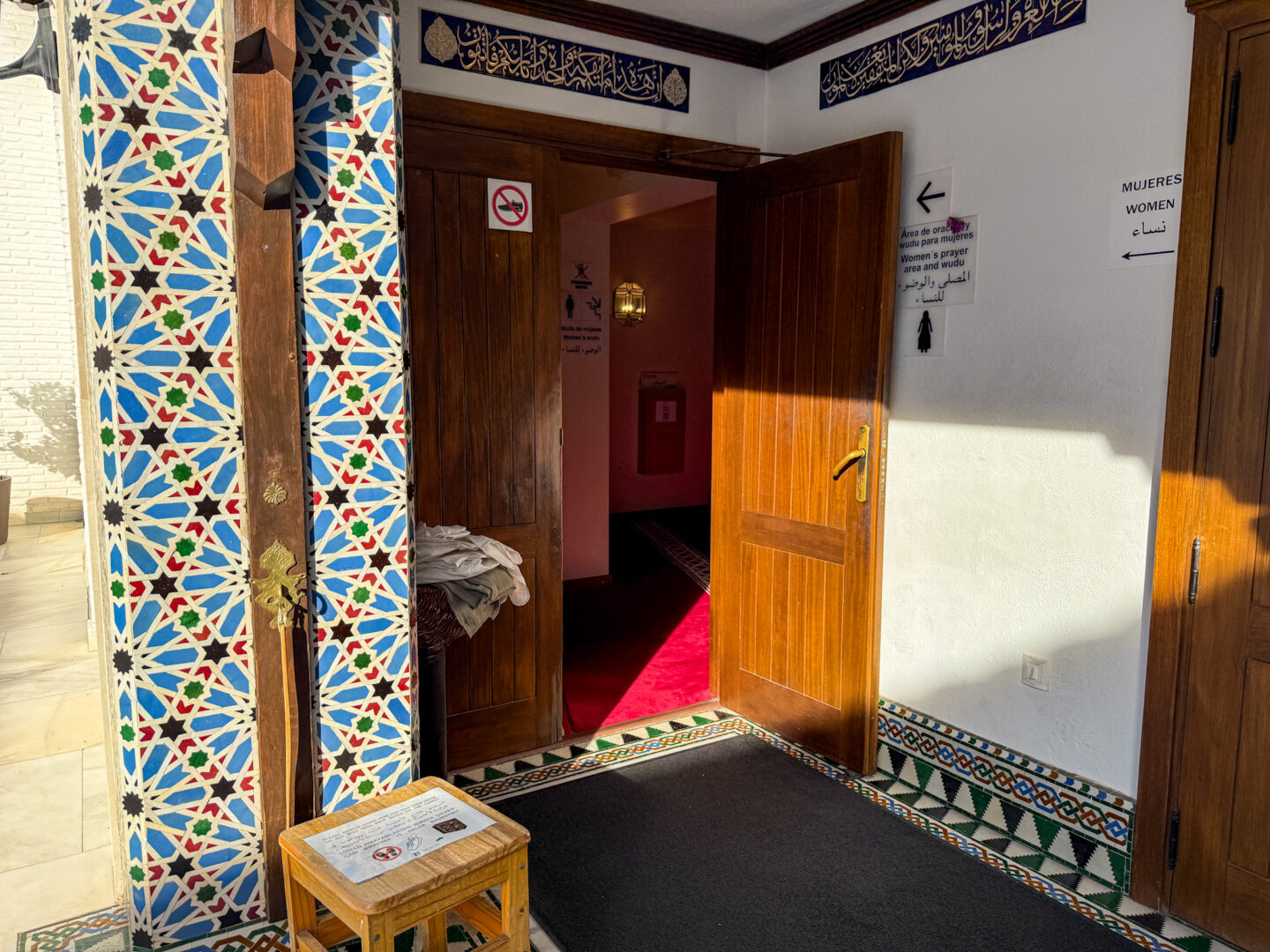
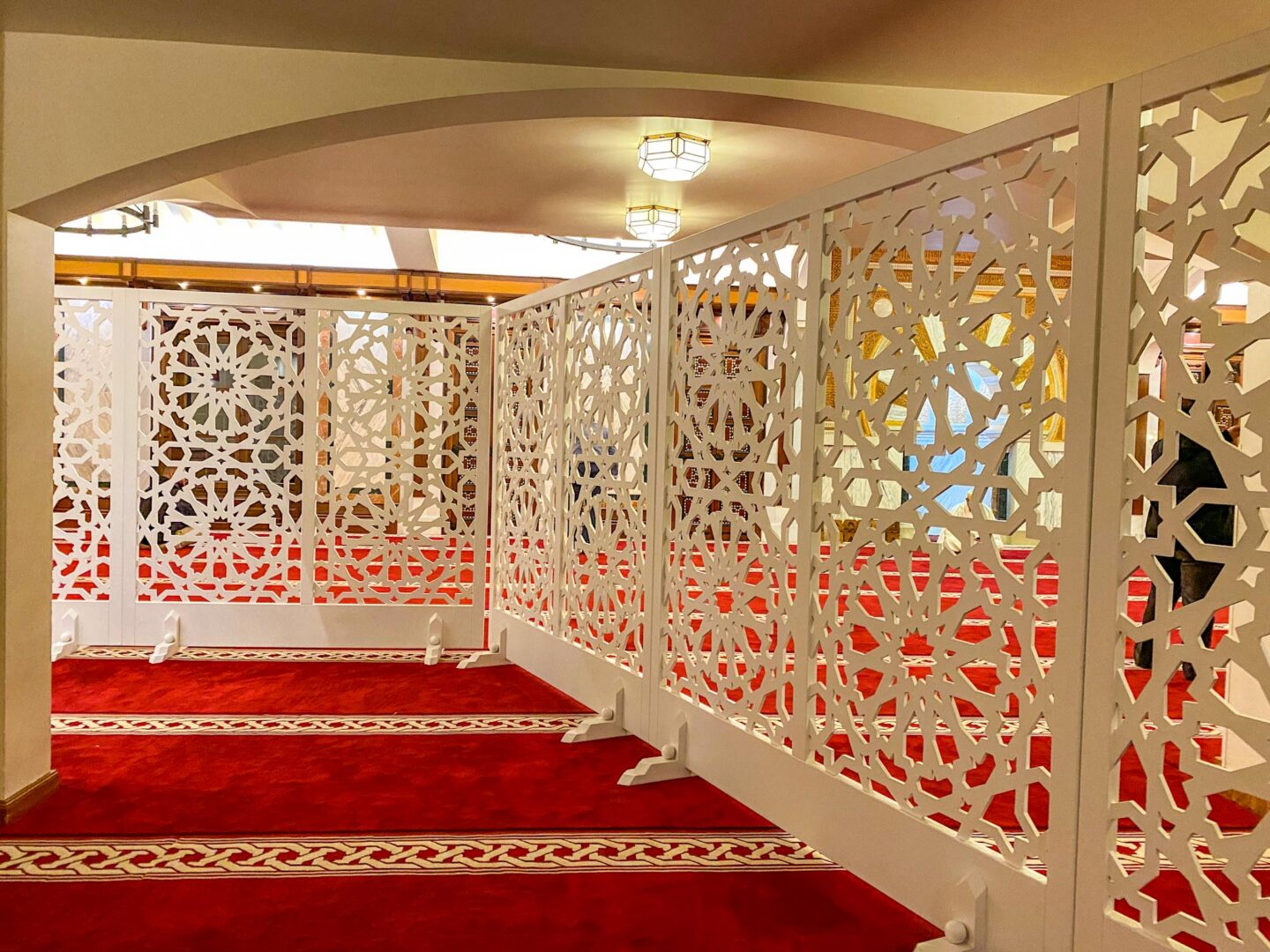
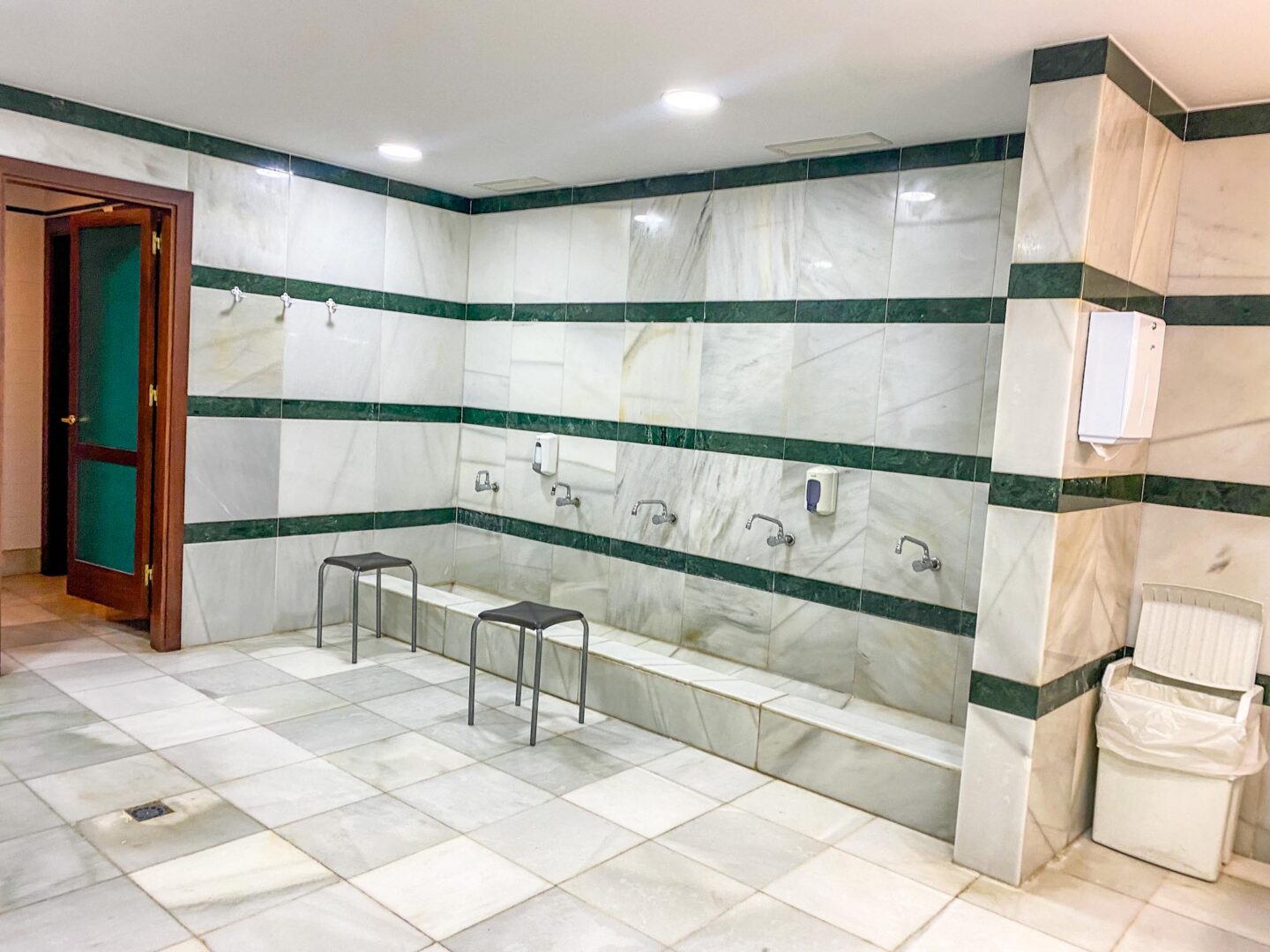
Women’s area for Friday prayer: For Jummah prayer, you do not enter the courtyard of the mosque, instead you follow the street around to the left and then you will see an open door leading down a set of stairs which is another (and the main) entrance to the women’s section and the wudu area. There is also space to pray outside here and leave a pram if you have a little one like I did.
Overall, as you would probably expect, people are very friendly. The Imam was outside the mosque on Friday pointing the women in the right direction and multiple ladies offered to help me carry my pram up and down the stairs into the women’s area which was a great help.
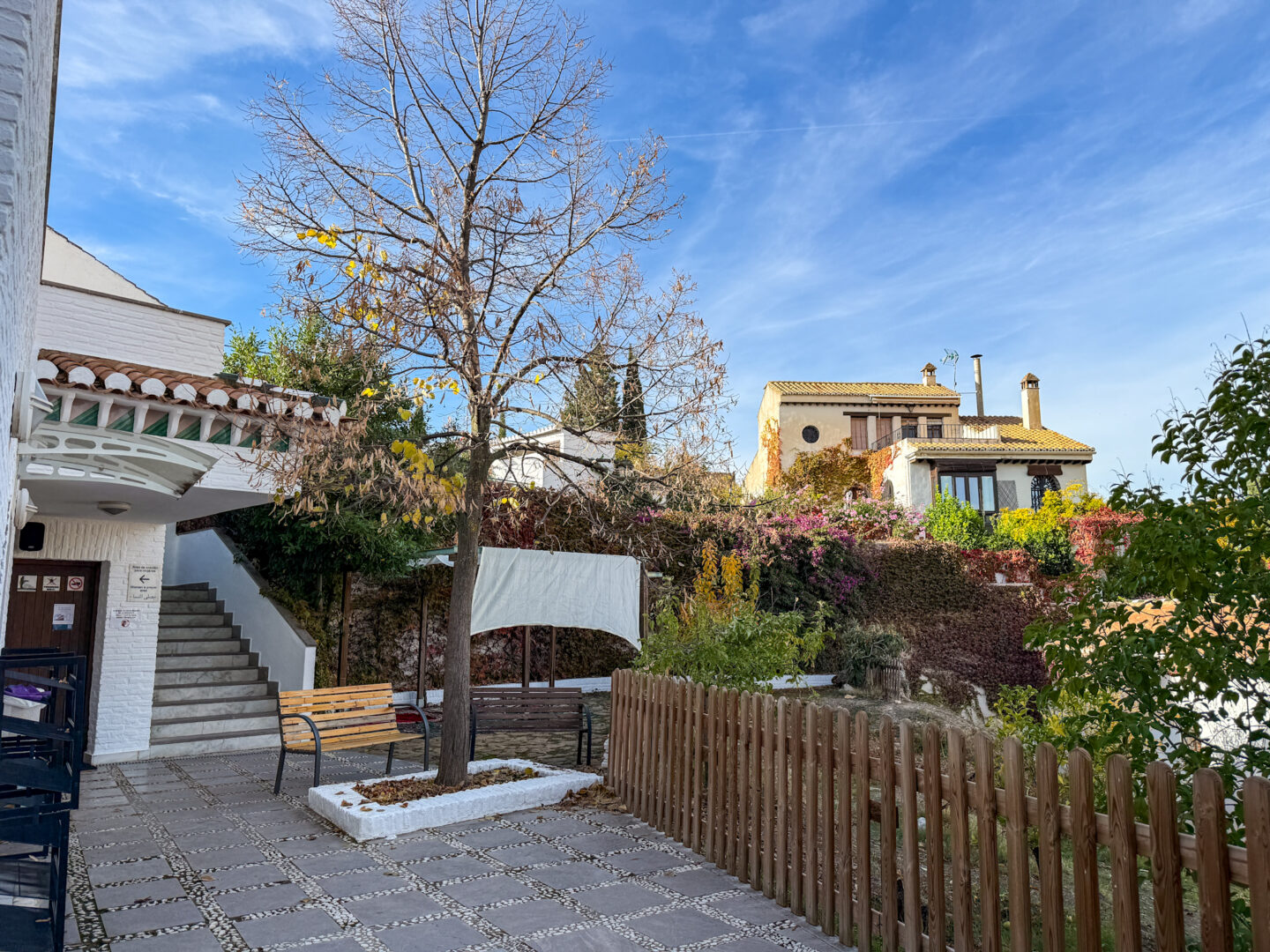
Tips for visiting Granada Mosque
- Dress modestly. Women should bring a headscarf, and everyone should cover arms and legs. The women’s area does offer prayer skirts as you enter which is handy.
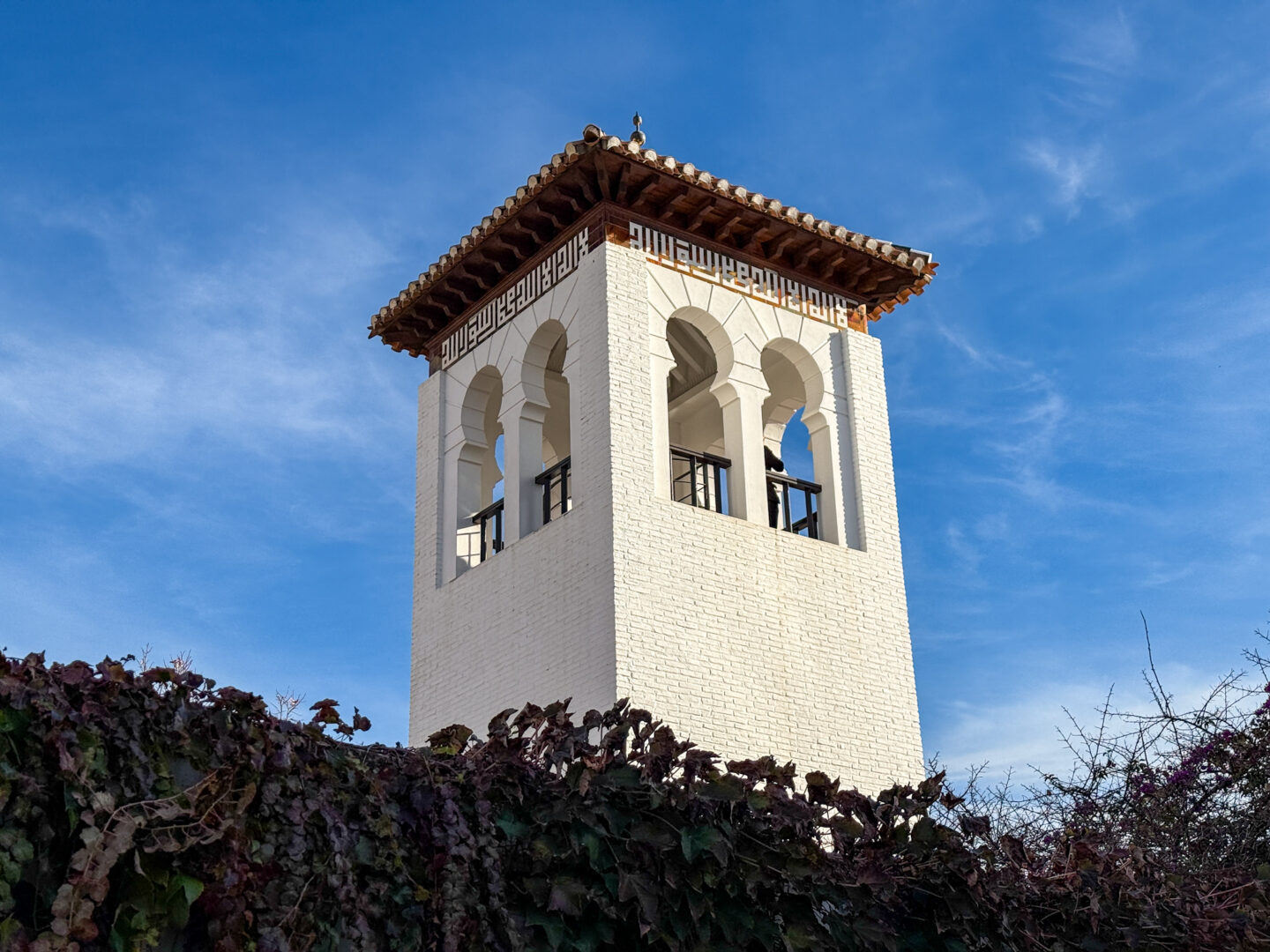
- Listen out for the adhan: In Granada, the adhan is called by voice from the minaret with no speaker which is pretty unique and incredible to see, and hear.
- Be ready for a climb. The mosque is at the top of the Albaicín, so it’s a steep walk up from Plaza Nueva.
- Take the bus to the mosque to avoid walking up the hill. There is a regular bus from Plaza Nueva which comes very 5 minutes. It is a red mini bus and to pay, you tap your card when you get on. Get off at Callejon de las Tomas’s 19 stop which is just a short walk (although slightly uphill) to the mosque.
- Where to park: If you want to drive to Granada Mosque, you will have to park in a parking lot about a 10 minute walk away. We parked in Parking San Cristóbal Albaicín and from here it is a 10 minute walk to the mosque through the Albaicín so there are lots of ups and down and steps.
- Check times on the day. The prayer hall is closed outside prayer times, and the garden’s hours change through the year so give it a google to double check and check their website here.
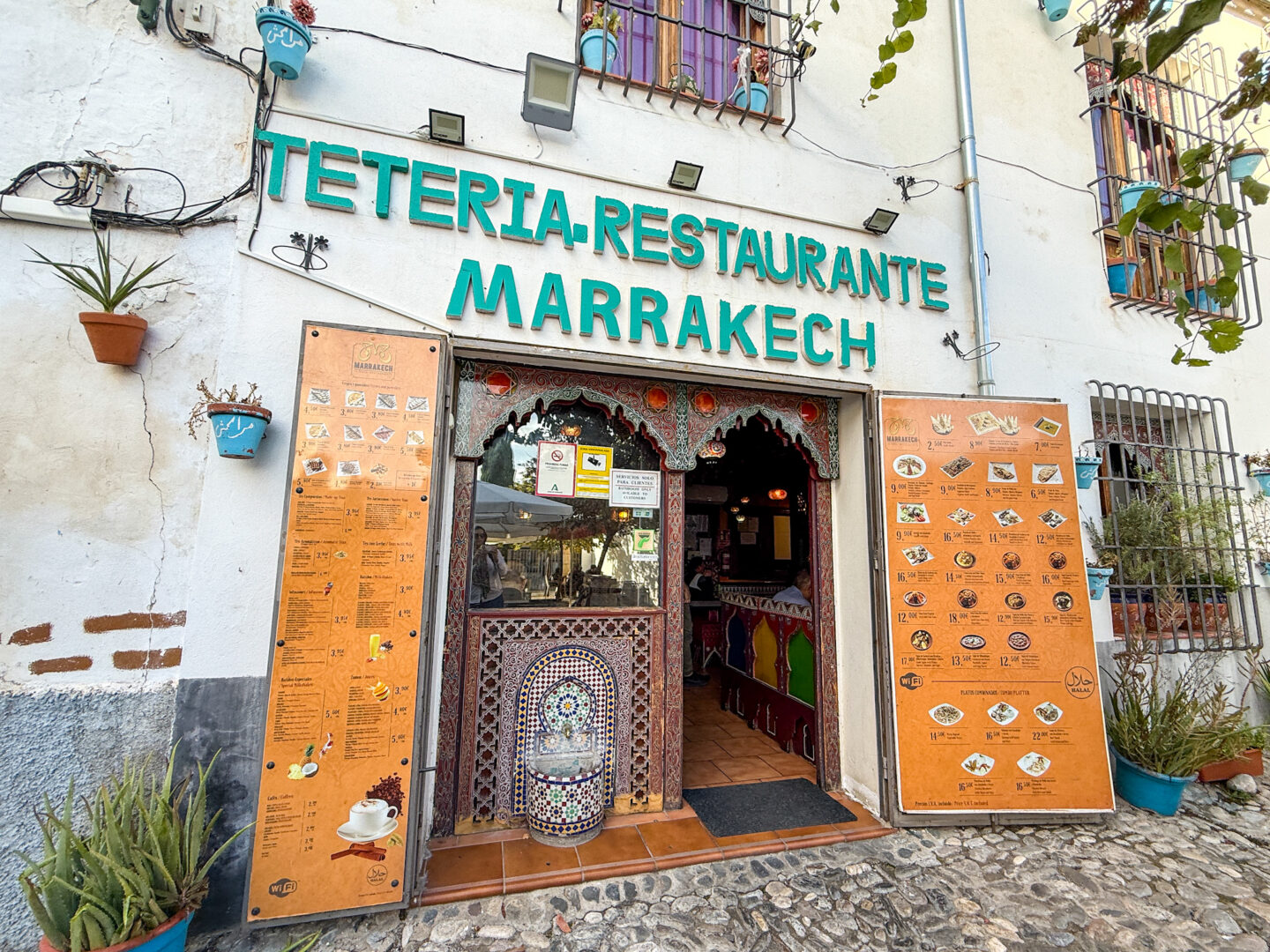
- Plan a bit more time: Nearby there are many teahouses with one Moroccan teahouse and restaurant right outside the mosque. It is a lovely area to relax in after prayer and perhaps get chatting to another traveller or a local.
Halal Food in Granada
Finding halal food in Granada is easy, and honestly there are far too many places to list them all. Most are in and around the Albaicín and the streets leading up from Plaza Nueva, where you’ll find Moroccan, Syrian, Lebanese, Turkish and Indian restaurant and kebab shops side by side and most of them will have a halal sign out the front.
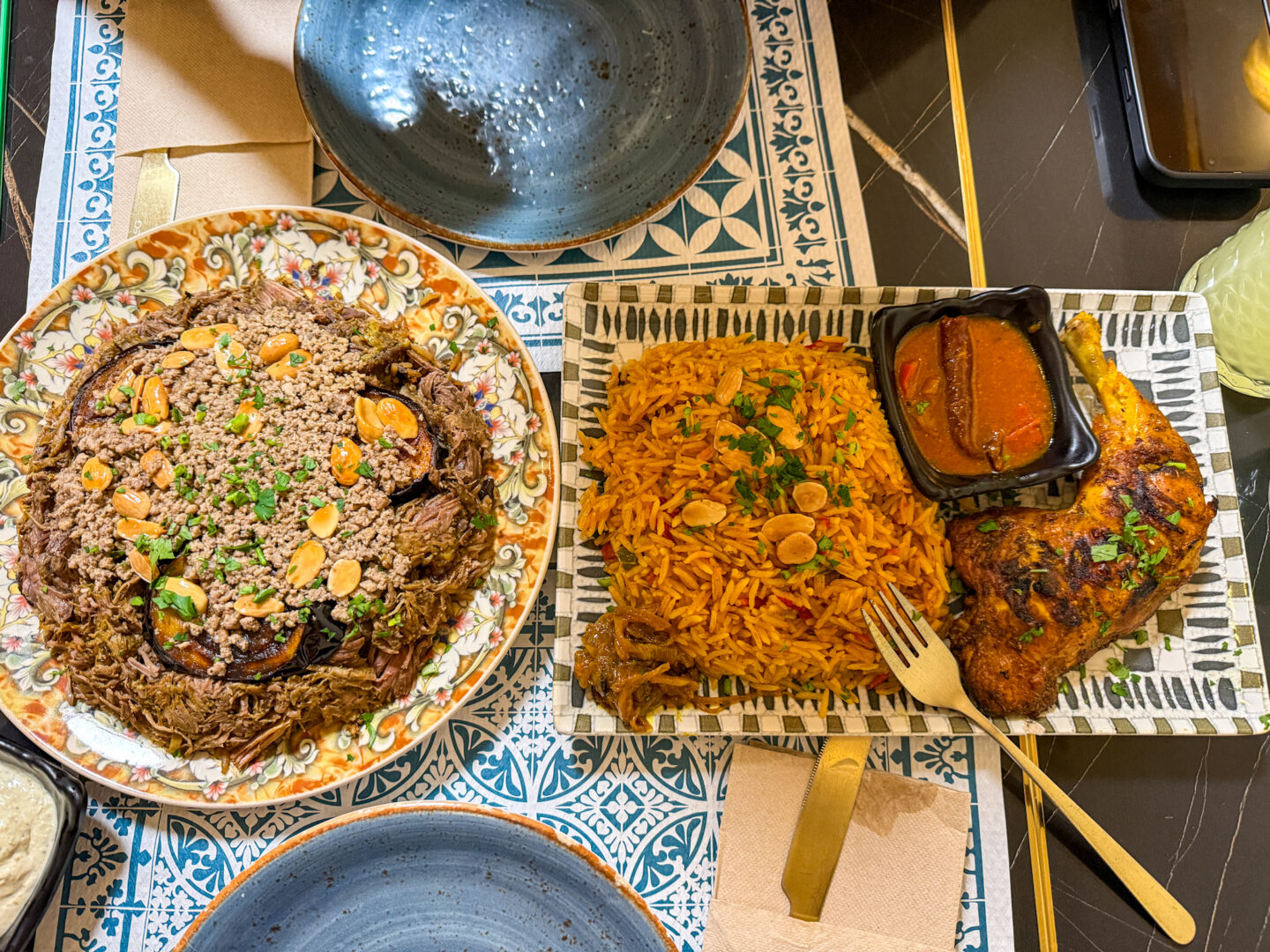
One place I really recommend is AMBAR Cuisine d’Orient which is an Arab restaurant close to Plaza Nueva so very central. They have an upstairs and downstairs area although seating is quite limited so give yourself some time to wait for a table. It’s pretty casual and nothing fancy but the food is brilliant.
We ordered the Kabsa and Maqluba and both were incredible and reasonable prices.
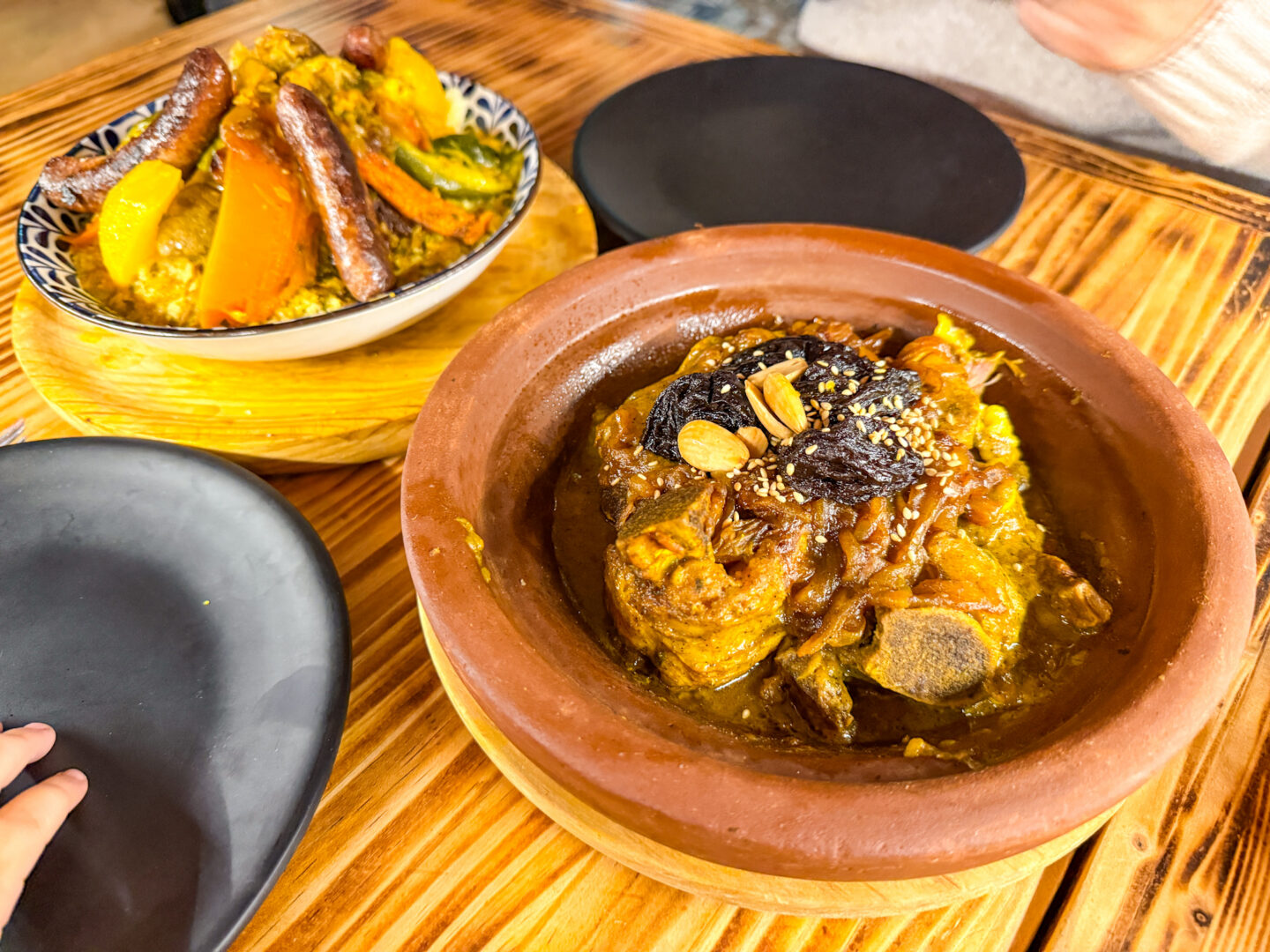
When looking for halal food in Granada, I will give you the warning that as with most cities, the places that are right in the centre are often overpriced and don’t always give good quality food.
We visited a Moroccan restaurant close to Plaza Nueva and although the food was good, it wasn’t amazing and prices were high so do some research beforehand and try to avoid the really central places if you can and if you are looking for better prices. Although much of the halal food is around the mains areas and Albaicín.
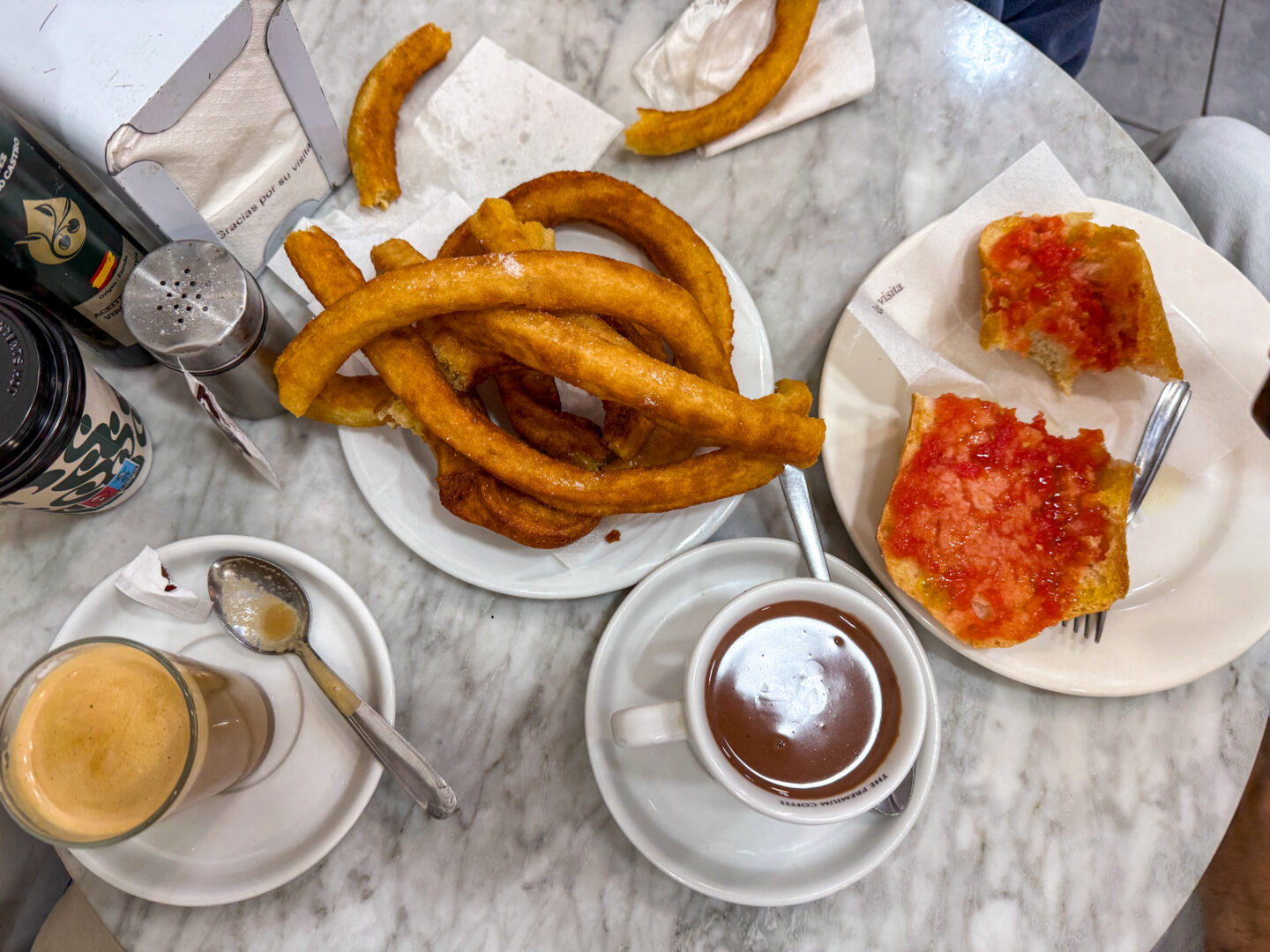
I also want to add that whilst many people always search for halal food when they travel, it is good to eat something the locals eat too! The problem with Spain is that the locals do eat a lot of pork so I found breakfast to be the best answer!
We found a few cafes for breakfast which served churros and chocolate along with tostada and tomato which is toasted crusty bread topped with a topping of choice like tomato or avocado and finished with olive oil. This is a great choice as it is local, cheap and there is no meat involved.
Beyond Granada: Córdoba and Other Mosques in Andalusia
Granada is the perfect base for exploring the rest of Muslim Andalusia. These are the places Muslim travellers visit most.
The Alpujarras
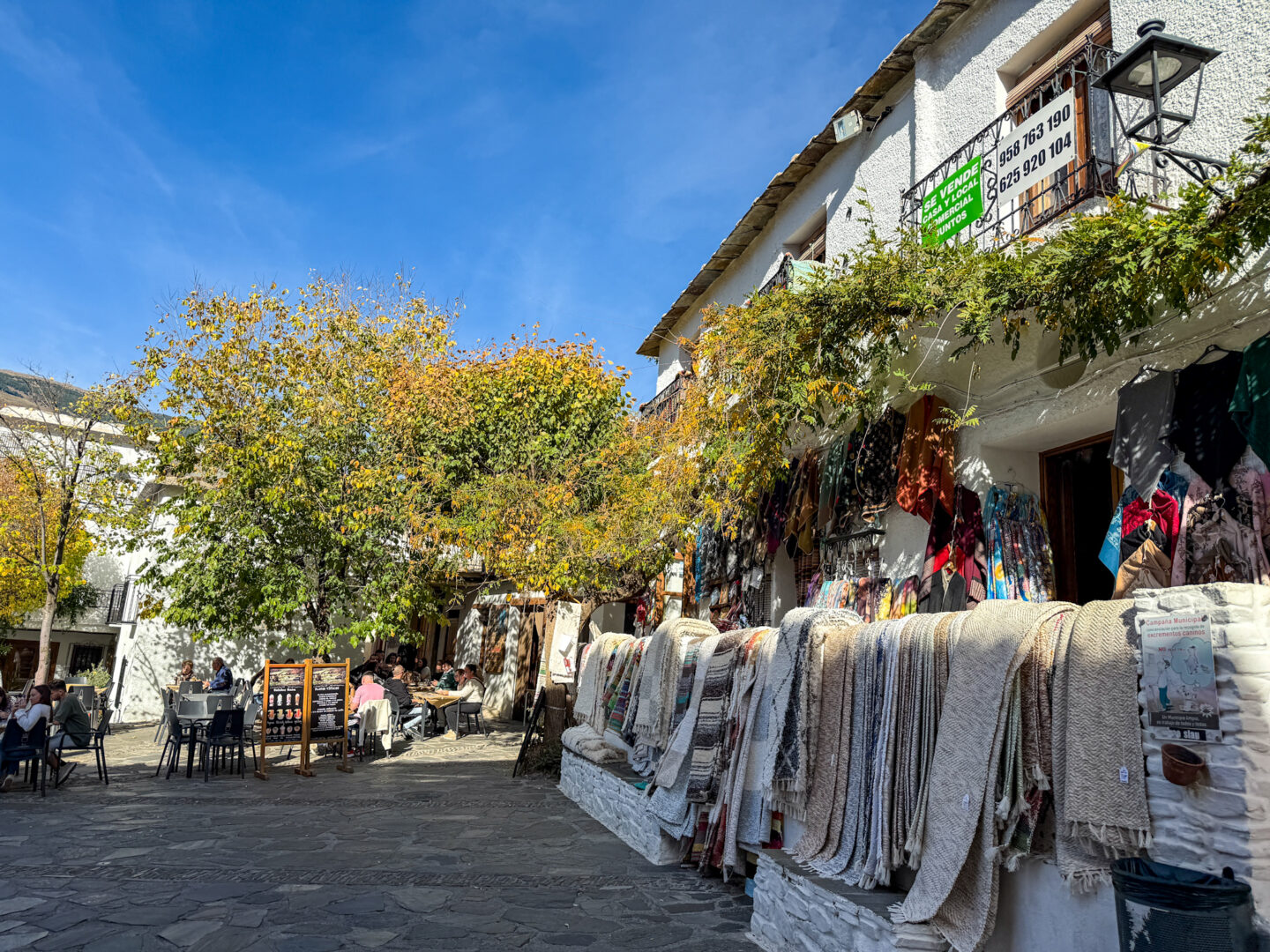
The white villages of the Alpujarras, in the mountains south of Granada, were where many Muslims retreated after 1492 and where the Moriscos rose up in revolt in 1568. The terraced fields and irrigation channels they built are still used today, and it’s a beautiful day trip. Many Muslims live in Orgiva and there is a halal restaurant called Baraka that I suggest you visit and a visit to the beautiful village of Pampaneira is a must!
Córdoba and the Great Mosque
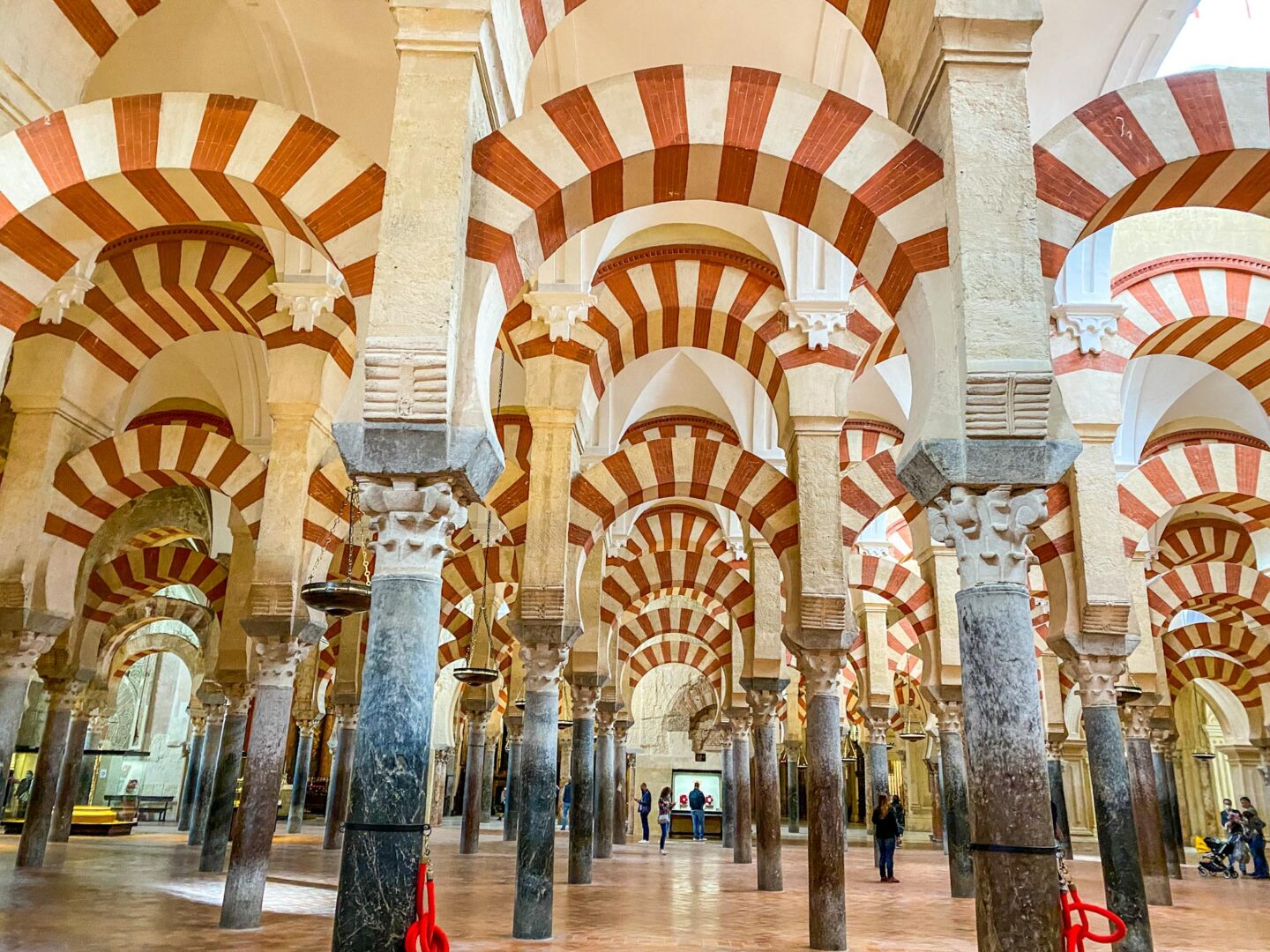
If you visit one other city, make it Córdoba. Its Great Mosque, begun in the 8th century when Córdoba was the capital of Al Andalus, is one of the most extraordinary buildings in the world. Walking into its forest of red and white striped arches is unforgettable and it looks even better than the photos.
It’s important to know that the building has been a Catholic cathedral since Córdoba fell in 1236, with a church built in the middle of the prayer hall in the 16th century. Today it’s officially called the Mosque Cathedral, and Muslim prayer isn’t permitted inside. For prayer, the Mezquita de los Andaluces on Calleja de la Hoguera in the old town welcomes visitors.
Seville
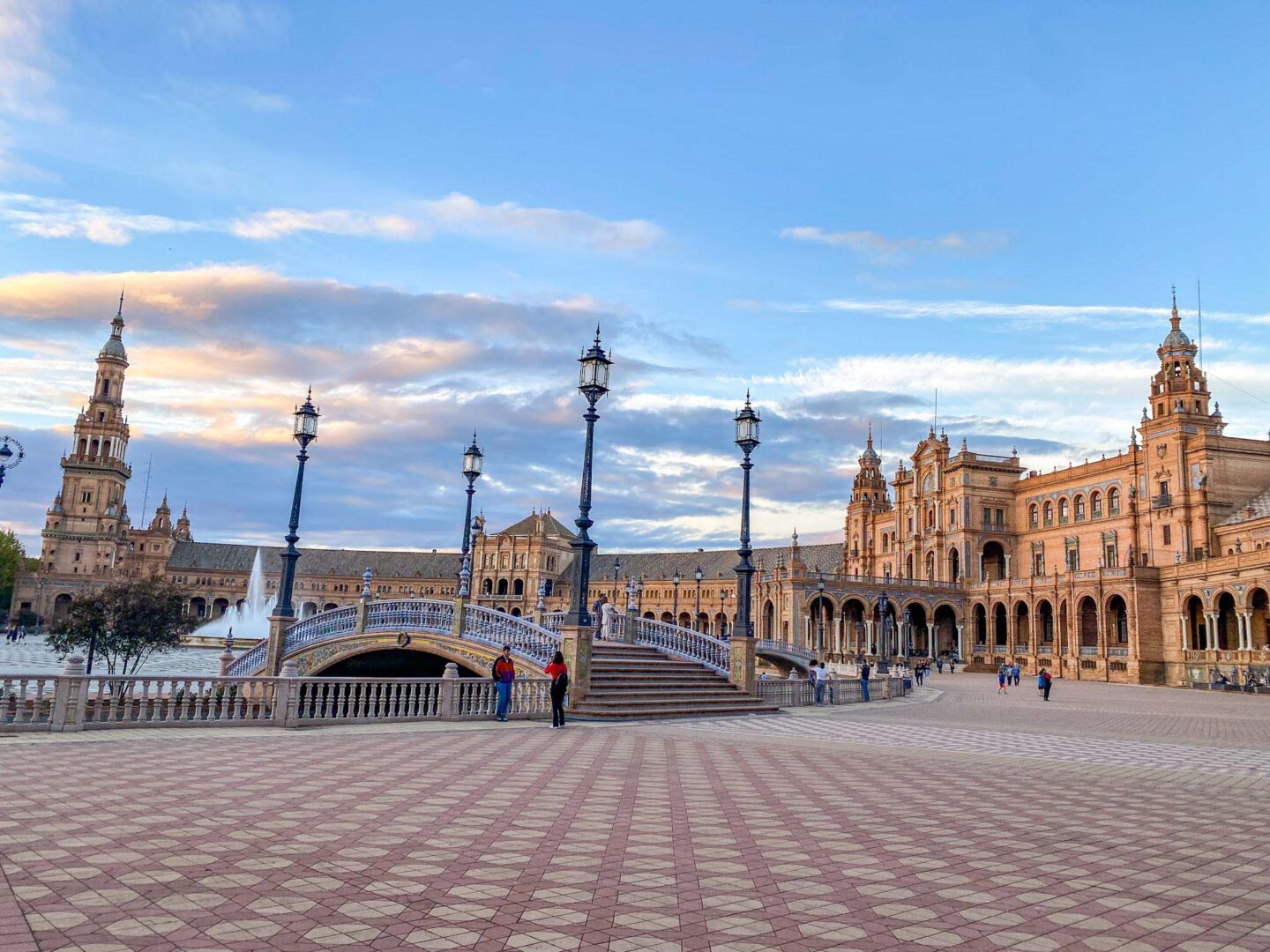
Seville was a great Muslim city for over 500 years. Its cathedral’s bell tower, the Giralda, began life as the minaret of the Almohad Great Mosque, and the Patio de los Naranjos was the mosque’s ablution courtyard. Don’t miss the Real Alcázar, a royal palace built in the Moorish style. Just be mindful if you’re visiting in the summer that Seville gets much hotter than Granada and it can be a hard time to visit.
Málaga
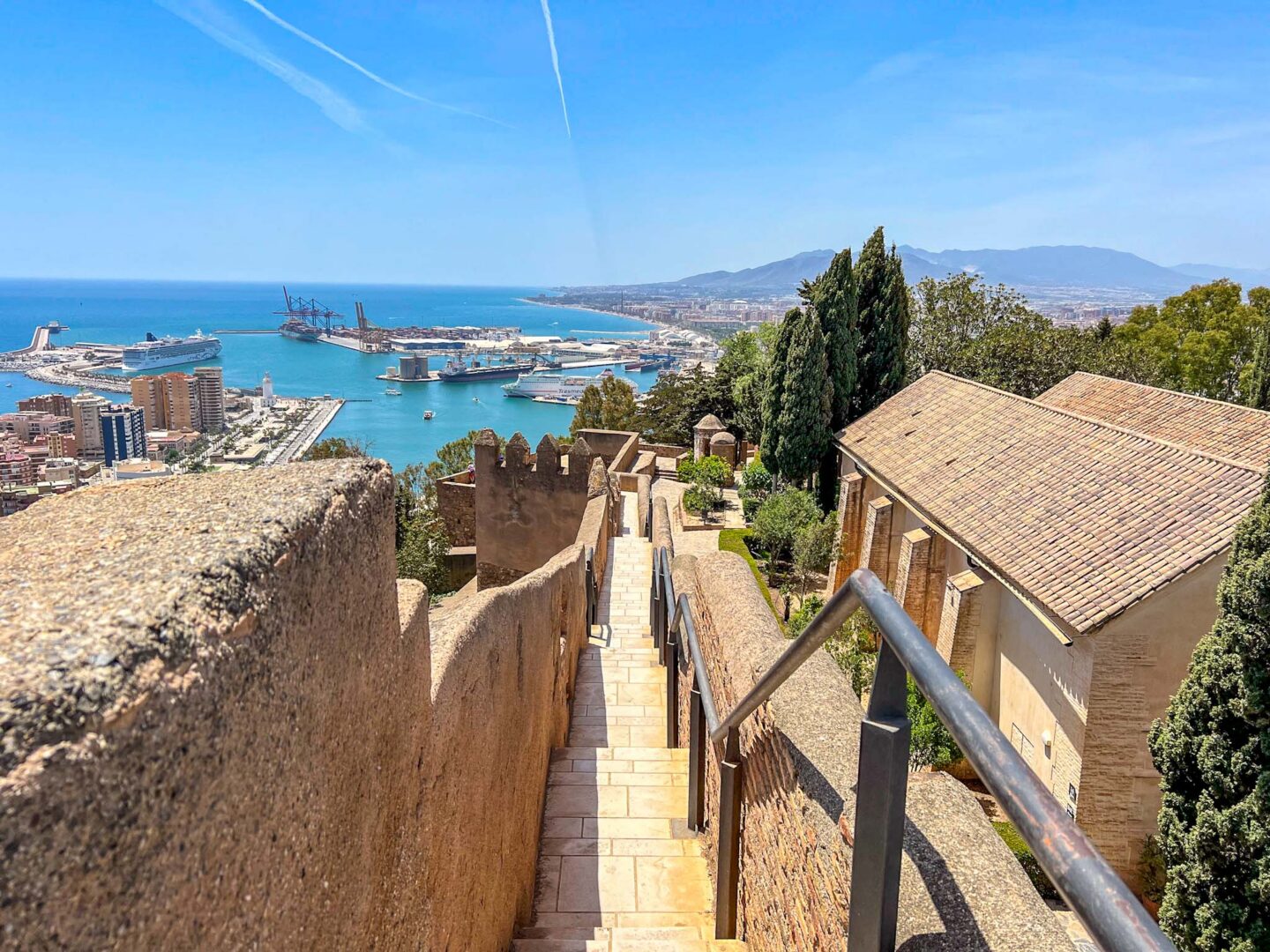
Málaga’s Mezquita Al Andalus is one of the largest mosques in Europe, with space for around 1,000 worshippers, classrooms and a library. While you’re in the city, visit the Alcazaba, the Moorish fortress on the hill.
Marbella
Marbella is known for its parties and fancy yachts these days but the King Abdul Aziz Mosque on Marbella’s Golden Mile was built in 1981 and was one of the first mosques built in Spain in modern times. Its white walls and peaceful courtyard make it a popular stop for Muslim travellers on the Costa del Sol.
Fuengirola
The Fuengirola Central Mosque is one of the biggest and most active mosques on the Costa del Sol, and a great choice if you want to spend some time on the coast as well as Granada. I met a lady on the way home from my trip to Granada who said she goes here every year with her family, they stay by the mosque and there are lots of halal places to eat too,
Muslim Travel in Granada FAQ
Is Granada good for Muslim travellers?
Yes, it’s one of the best cities in Europe for Muslim travellers. There’s plenty of halal food, an active mosque in the Albaicín, and some of the most important Islamic heritage in the world, including the Alhambra.
Is there halal food in Granada?
Yes, lots. Most halal restaurants are in the Albaicín and around Plaza Nueva, serving Moroccan, Middle Eastern, Turkish and Indian food. Always ask, as not every Moroccan style restaurant is halal.
Is there a mosque in Granada?
Yes. The Granada Mosque (Mezquita Mayor de Granada) is on Plaza San Nicolás in the Albaicín. It opened in 2003 and holds daily prayers and Friday jumu’ah, and its garden has one of the best views of the Alhambra.
Can Muslims pray in the Mezquita of Córdoba?
No. The Great Mosque of Córdoba has been a Catholic cathedral since 1236, and Muslim prayer isn’t permitted inside. You can pray nearby at the Mezquita de los Andaluces in the old town.
Is Granada safe for Muslim women?
I have never been to Granada completely solo, instead I have been 3 times with a group of women and I have always felt very safe. It is a small city which is easy to navigate and always busy meaning you are not alone.
What’s the best time for a Muslim trip to Granada?
Spring and autumn are the most comfortable for walking. I’ve been twice in November and really recommend this time of year. Summer is a good time to visit Granada but it does get extremely hot which makes it harder to explore which is what Granada is all about. Ramadan is a brilliant time to visit because of the prayers at the mosque and Eid is a big deal with Eid prayers happening in the fields nearby with big local celebrations and the community is very welcoming.
I hope this helps you with Muslim travel in Granada and halal travel in Granada.
- For more of my Spain and halal guide see:
- Southern Spain Itinerary COMPLETE GUIDE – Short or Long Trip!
- One Day in Granada, Spain: The Perfect 1 Day Granada Itinerary
- 14 BEST Places to Visit in Tenerife! Off-The-Beaten-Path!
- 31+ BEST Halal Restaurants in Manchester (Local Guide)
- 10 Places for Halal Food in Reykjavik & Muslims Guide to Iceland!